Pragmata director Yonghee Cho says it's not a sad dad game for a very simple reason: 'I'm not a sad dad, I'm a very happy dad'
Pragmata is one of my favorite games of the year so far, and a big part of that is down to the relationship between protagonists Hugh and Diana, a deeply normal in-over-his-head guy and a wide-eyed, enthusiastic young android. Banter that could so easily come off as infantilizing, and a story that could easily come acr...
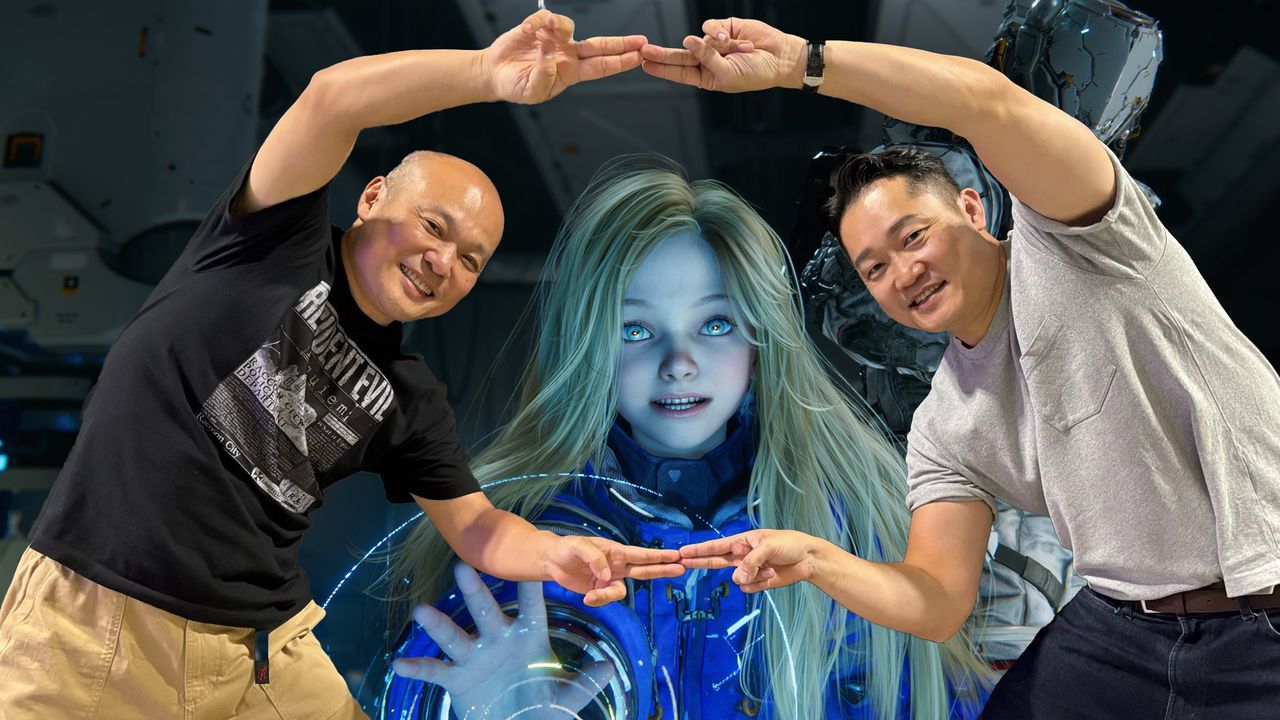
Pragmata is one of my favorite games of the year so far, and a big part of that is down to the relationship between protagonists Hugh and Diana, a deeply normal in-over-his-head guy and a wide-eyed, enthusiastic young android. Banter that could so easily come off as infantilizing, and a story that could easily come across cloying as Hugh instinctively protects Diana, are instead handled with a deft touch.
This hasn't stopped Pragmata from being lumped into the "sad dad" canon alongside The Last of Us and God of War in some reviews; I agree more with Kotaku's Kenneth Shephard, who wrote "Pragmata reads like it was made by people who think that fatherhood rules, actually, and that getting to provide a young mind with insight, fun, and dreams is a meaningful thing that enriches a person’s life."
When I think about Pragmata's dad-ness, I'm also thinking about the people behind the game, given that the sad dad narrative has been shaped by game directors becoming parents. Pragmata may also be shaped by its director Yonghee Cho, but in an interview with PC Gamer he said there's an obvious reason it's not a sad dad game: He's not a sad dad.
"I have a daughter who's about Diana's age, and an older son as well," he said. "I don't think it would fit into the sad dad category, and one of the reasons I think that is because I'm not a sad dad, I'm a very happy dad. When I was creating the story and the actions of the characters, I put myself in the shoes of the characters a lot, and I consider myself pretty happy."
Cho added that while there are obviously elements of a parent-child relationship between Hugh and Diana, it was more meant to highlight companionship—a "buddy type feeling" of cooperating and helping each other out.
"That's a very conscious thing that the development team did. It's not just a parent and child dynamic. If we focused solely on that, players who don't have children might have more difficulty resonating with that, but having that buddy element in there allows a great range [of players who can relate], and a more lighthearted feel."
When I asked Cho if he had kids, he also shared his daughter's reaction to a dramatic moment in the story; she turned to him and said "You can't leave me alone!", apparently identifying with Diana.
"I told her, 'it's okay, Hugh's not your dad—I'm your dad! I'm here," Cho said, while miming patting his daughter on the head reassuringly.
Who knows what we can expect from Cho's future games, though. Once his kids become teenagers, maybe he'll be ready to lean into the angst.
The PC Gaming Show returns Sunday, June 7 at 12 pm PDT! Visit the show's Steam page to wishlist your most anticipated games and get more information on how to tune in for the big reveals.
Original reporting appears on the publisher’s site.
Open original article →