3 years after a $2 billion implosion, studio closures, and cancellations, Embracer's new CEO hopes 'trust is improving'
Embracer CEO Phil Rogers didn't win himself many new fans when he said a few years ago that the company's slash-and-burn restructuring, the result of years of hand-over-fist acquisitions that, whoops, it couldn't really afford, was "how we win." This was when Rogers was still Embracer's interim chief strategy officer,...
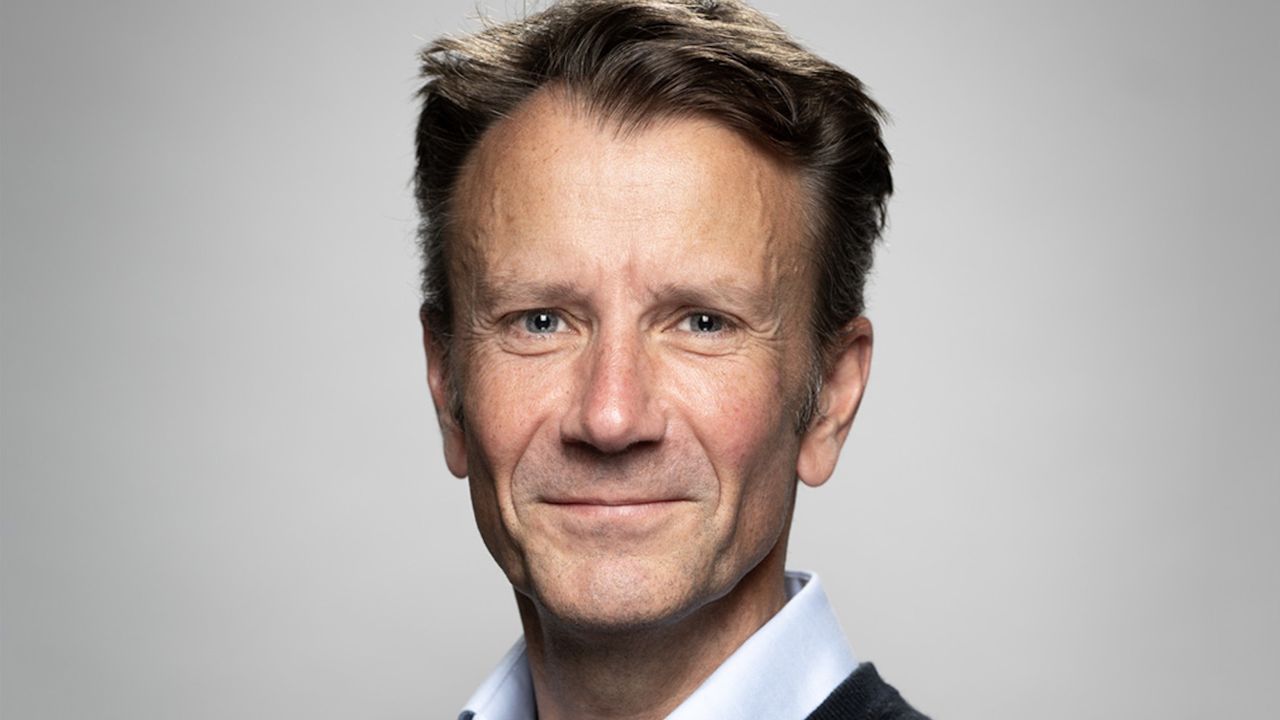
Embracer CEO Phil Rogers didn't win himself many new fans when he said a few years ago that the company's slash-and-burn restructuring, the result of years of hand-over-fist acquisitions that, whoops, it couldn't really afford, was "how we win." This was when Rogers was still Embracer's interim chief strategy officer, prior to his 2025 ascension to CEO, a not-really change in power that saw outgoing CEO Lars Wingefors, the mastermind of Embracer's rise and fall, become its executive chair, a position from which he will focus on "mergers and acquisitions and capital allocation."
Embracer announced the end of that restructuring in March 2024 with the sale of Gearbox, but layoffs and closures have continued more or less apace since then: In October 2025 Embracer sold off Arc Games and Cryptic Studios, for instance, and in March 2026 it laid off 124 people at Eidos Montreal, the fourth round of layoffs at the studio since January 2024.
It's also restructured three times: In April 2024 it transformed into three separate, publicly listed companies named Asmodee Corp, Coffee Stain & Friends, and Middle-Earth Enterprises & Friends; in May 2025 it spun off the Coffee Stain group and renamed Middle Earth Enterprises & Friends to Fellowship Entertainment; and just last month, April 2026, it spun off Fellowship into its own publicly listed company.
That most recent move gave us one of the best headlines you will ever see:
I recap all of these things because in a new interview with The Game Business, Rogers expressed hope that despite everything—and it's a lot—"trust" in the company is improving.
"It’s been a very humbling experience," Rogers said. "There’s a lot of reflection on that in terms of how the industry changed and could we have not all predicted this?"
I think, as a quick aside, that the answer to his rhetorical question is clearly "yes": Perhaps not all of it, but certainly some of it. The runaway growth of the game industry was fuelled by the extraordinary demands of the Covid-19 pandemic, which kept us at home a lot more than we were used to and thus forced us to find new things to do. This was never going to be a permanent state of affairs and as the pandemic settled into the background, people started going outside again, because of course they did.
And sure, it's easy to make that call in hindsight, but I don't think it was all that difficult to make it in the moment either—and more to the point, these C-suite guys get paid millions of dollars every year precisely because they are supposed to know this stuff and make these calls properly. Embracer is hardly alone in that particular whiff, but the scale of its implosion has made it the pinup boy of hoo boy.
Anyway.
"I’d hope trust is improving," Roger continued. "In the industry, if you poll 100 people [asking] what they think about Embracer… whatever that score is, I want it to be better in a year, two years, five years, and that’s the pragmatism. Lots of companies in this industry have had tough times, and then reset and rethink things, and then improve. We’re absolutely in that camp."
Embracer certainly has room to improve, if only because it's spent the past three years making such a spectacular mess of things. In Rogers' defense, he's absolutely correct that the entire industry is in a bad state right now, with layoffs, closures, and cancellations taking a toll on studios of all sizes.
Whether that's likely to get better in the near future is an open question, as is how one even defines "better" in the first place. Rogers said he doesn't think that "necessarily with more money you find more fun," but finding ways to keep costs down, through the use of AI-powered tools or by developing in lower-cost regions, is clearly a priority. And despite Embracer's recent experiences, he said new mergers and acquisitions are always a possibility too—"with learnings" from the last blowup.
"Funding for any M&A would come through organic cash flows, which is really important to mention," Rogers said. "The Embracer [segment] has a lot of businesses that have created good positions. Some of them are very specialized. And again, if M&A can help grow those businesses, then it’s on the cards."
The PC Gaming Show returns Sunday, June 7 at 12 pm PDT! Visit the show's Steam page to wishlist your most anticipated games and get more information on how to tune in for the big reveals.
Original reporting appears on the publisher’s site.
Open original article →