
'We probably sold millions of boards because of that game, and it was magnificent': 3dfx cofounder gives Quake a 'great deal of credit for our overall success'
If you care about retro PC gaming hardware, there's a good chance you've heard of the now-defunct 3dfx. And if you know 3dfx, there's an even better chance you've heard of the 3dfx Voodoo graphics card. Well, according to one of its founders, its success is owed at least in part to the legendary shooter Quake. Ross Smi...
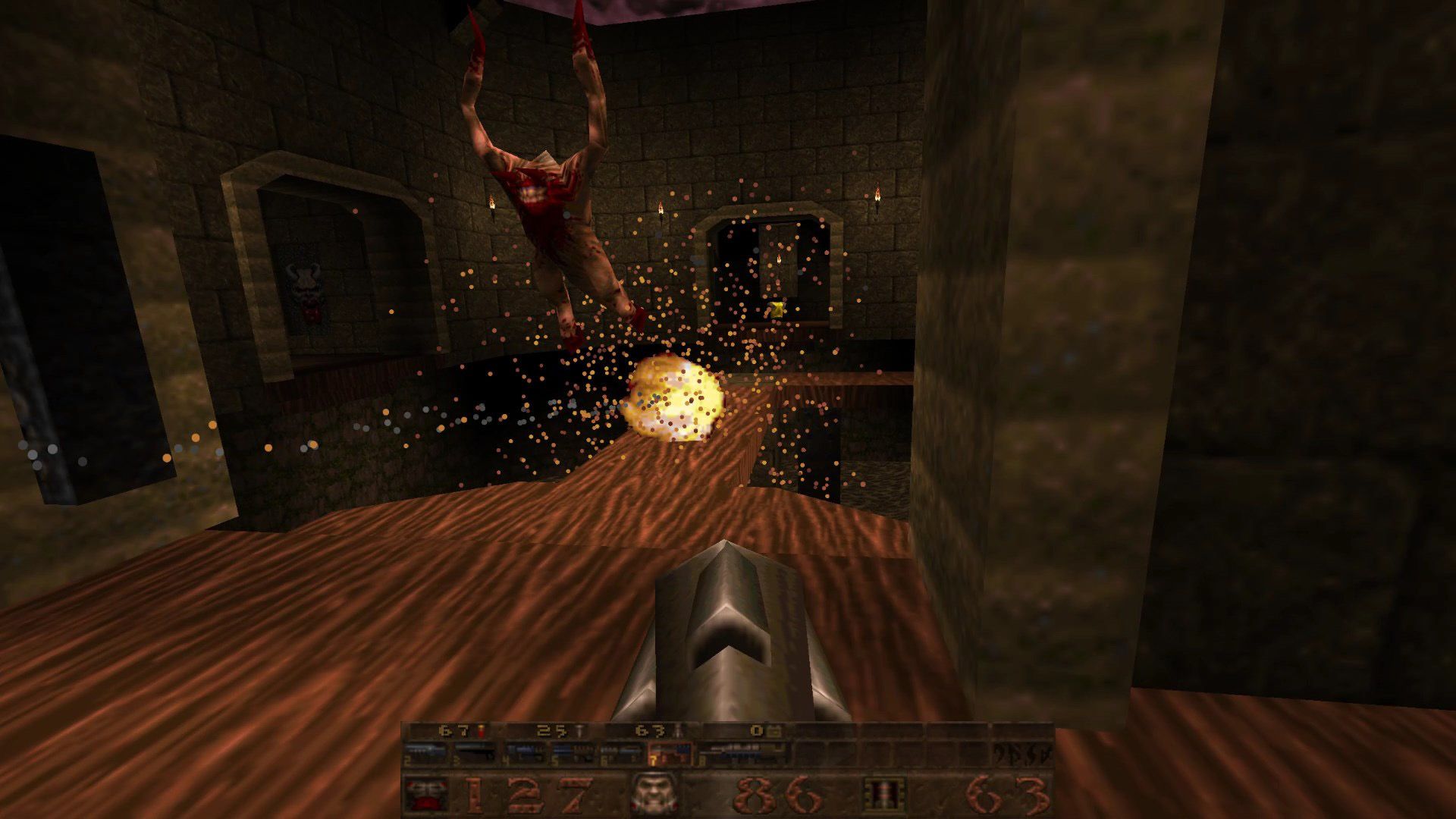
If you care about retro PC gaming hardware, there's a good chance you've heard of the now-defunct 3dfx. And if you know 3dfx, there's an even better chance you've heard of the 3dfx Voodoo graphics card. Well, according to one of its founders, its success is owed at least in part to the legendary shooter Quake.
Ross Smith recently spoke to our friends at Club386 in celebration of the first 3dfx Voodoo turning 30 years old, and he talks about the 'Quake effect'.
Effectively, though Quake launched in June 1996, it didn't get GLQuake, which allowed for 3D hardware acceleration, until the start of 1997. John Carmack reportedly reached out to 3dfx, which then worked on an API called MiniGL that could run the game. In its implementation, 3dfx cards could then run the game at a better resolution in greater detail with a wider range of colours.
Smith says, "I would certainly give id, John, and Quake a great deal of credit for our overall successâwe probably sold millions of boards because of that game, and it was magnificent. Thatâs the last game Iâve gone all the way to the end on, and I was exhausted after doing that. It was well crafted, beautiful, dark."
It makes sense why developers would want to work with the likes of 3dfx because better compatibility makes their games look better. And a developer is more likely to sell a game if it can wow an audience.
This symbiotic relationship was key to 3dfx development at the start. 3dfx reportedly reached out to developers to show games pre-rendered on 3dfx Voodoo cards, and "they loved it".
Smith argues this relationship to developers was quite unique at the time. "Most other companies, like S3 or others, saw game developers kind of as a necessary evil, not as the lifeblood of a company thatâs focused on gaming. So we flipped the whole thing around.â
This is a relationship that might seem familiar nowadays, with the likes of Nvidia, Intel, and AMD working directly with developers to improve software. Nvidia and 3dfx famously took each other to court for various patent infringement complaints in the late '90s and early '00s, and Nvidia acquired many of 3dfx's assets after it filed for bankruptcy in the early 2000s. So in a way, we have 3dfx to thank for parts of Nvidia's successes in the following years, too.
And 3dfx was unique in a few ways. The Voodoo cards had great 3D acceleration because it was designed specifically for 3D acceleration as a co-processor alongside a 2D card, letting the CPU do other background work at the same time.
It was just one of many steps towards hardware that was specifically designed for gaming rigs. "We did something revolutionary there," says Smith, "we didnât have a VGA. That was partly down to our lack of design experience, and partly down to my concern about profitability and compatibility. Being compatible with a million apps is really hardâbeing compatible with 200 games is much easier.â
Original reporting appears on the publisher’s site.
Open original article →