
The top 10 scariest RPGs I've ever played—and one I'm too afraid to try
'Tis the season, spooky season, and I am also one of PCG's RPG guys. Thus, scary RPGs to celebrate the Halloween spirit must be organized and expounded upon. In a genre that often delivers numbers-based power fantasies in no particular rush, it can be difficult to elicit fear from the player. So when that does happen,...
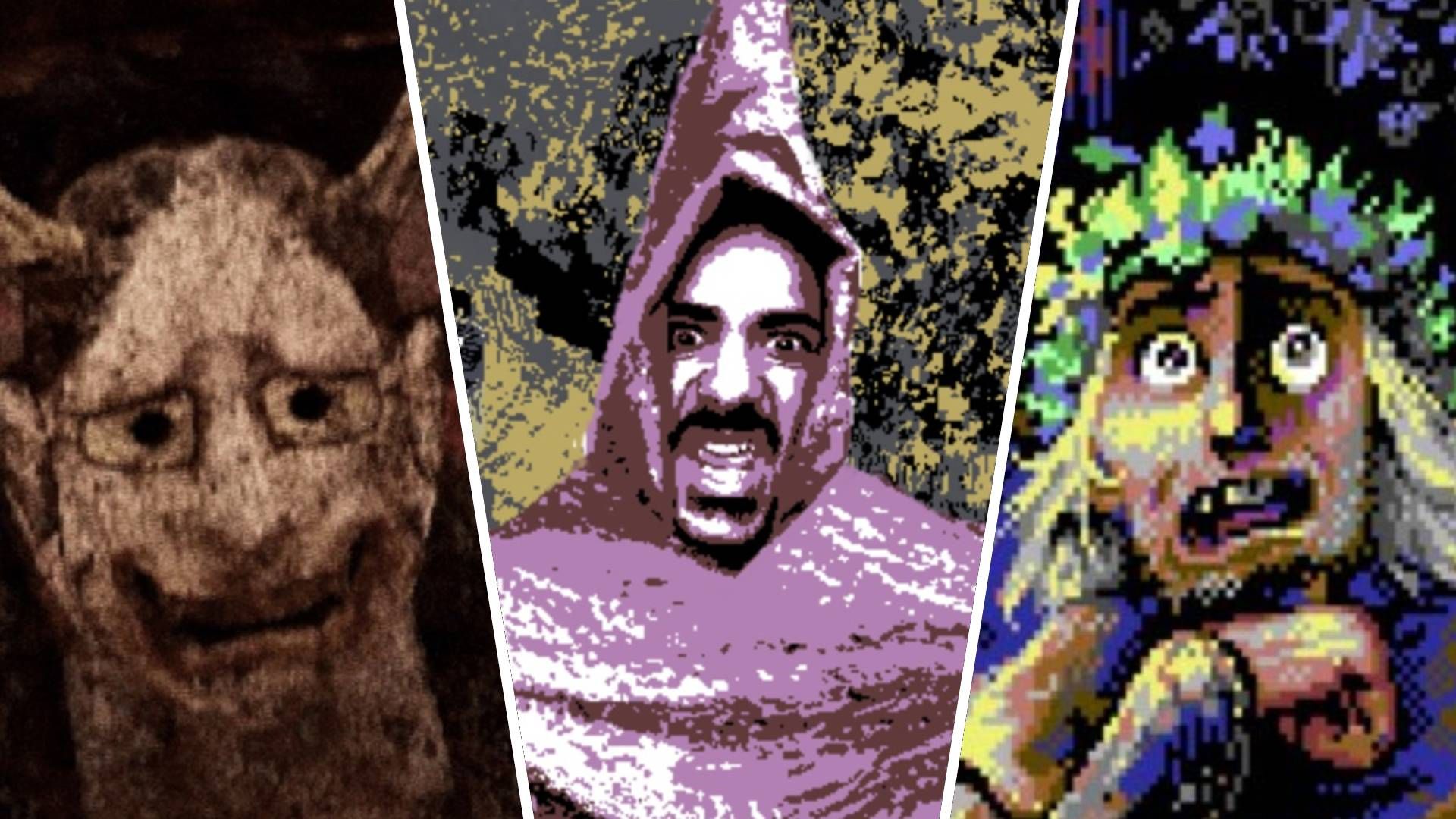
'Tis the season, spooky season, and I am also one of PCG's RPG guys. Thus, scary RPGs to celebrate the Halloween spirit must be organized and expounded upon. In a genre that often delivers numbers-based power fantasies in no particular rush, it can be difficult to elicit fear from the player. So when that does happen, I am listening, learning, and taking notes.
I've organized the entries in escalating order of scariness, culminating in a game I want to try some day, but freaks me the hell out just by reputation alone.
10. Star Wars: Knights of the Old Republic 2 - The Sith Lords
This article is brought to you by No More Room in Hell 2.
Kotor 2 is one of my favorite games, and it delivers this overall grim, grimy, hopeless atmosphere like nothing else in Star Wars. Many RPGs consolidate their horror into one or two super-freaky parts, and The Sith Lords boasts a few memorable set pieces in this regard.
The academy on Korriban is particularly affecting for me: This ruined, haunted school where untold suffering took place in the relatively recent past. Seeing it in its gruesome prime in Kotor 1 only adds to the effect. You've seen what the beast can do, and now you're poking its corpse.
Shout out as well to the opening bit on Peragus, specifically the part where ghost ship Harbinger docks with the station. The whole sequence is a very fun and loving riff on System Shock, and I'll always remember this gnarly audio log that introduces one of the game's main antagonists.
9. System Shock 2
- 'Shock 2 is a habitual, honestly mandatory entry on lists like this, and while it's scarier than your average RPG, I feel comfortable putting it close to the bottom. It has an incredible sense of atmosphere all the way through, and while I had the Shodan thing spoiled for me like, 15 years before I played for the first time, it still landed.
- I just never found it truly dreadfulâ âtense, fun, and exciting, sure, but it didn't shake me to my core. What's more, Looking Glass was capable of next-level scares: Its Thief series (sadly not RPGs themselves) is full of haunting levels like "Down in the Bonehoard" that rank among the most atmospheric, creepy places I've ever explored in a game.
8. Dread Delusion
- Similar to 'Shock 2, Dread Delusion primarily delivers on grim atmosphere and creepy, mind-expanding lore. It's a world where gods are tangible, physical beings that can materially alter human life, but they've been warped by humanity's collective unconscious into cruel parodies of themselves, like the fertility god morphed into a festering, fermenting being of unchecked fecundity.
- But Dread Delusion also has some good old fashioned campfire scares to cut all the high-falutin' stuff. My favorite: A fetch quest where you pass through a room full of lively people joking and bullshitting around, grab the macguffin of the day, turn around, and see that they were really corpses the entire time.
7. Felvidek
- Felvidek is an overpoweringly low fantasy adventure told through the shockingly whimsical medium of an old-school JRPGâ âlike, older than old-school, Dragon Quest 1-level simplicity. It starts extremely grounded with the story of a heartbroken, alcoholic knight investigating an incursion by the Ottoman Turks into the Slovak highlands, but eventually takes a turn for the Strange.
- The Lovecraftian oddities and journey into a subterranean world later in the story made me pine for the relief of plain old muddy medieval misery, and Felvidek actually delivers that relief: At the risk of spoiling too much, it blinks, ending on a bittersweet, but generally "happy" note. Not necessarily a bad thing, but the other 2020s retro-style indie RPG further down this list doesn't let you come up for air in the same way.
6. Fallout
Fallout is a series that has reinvented itself over and over again, but no other entry has quite matched the sense of desolation in the 1997 original. Even the most gore-slick, in-your-face edgy portions of Fallout 3 don't quite do it for me in the same way.
More than anything, I just think of the ethering, "nothing is scarier" sight of the Vault Dweller standing alone amid tiles of empty desert, the drone of Mark Morgan's ominous soundtrack your only companyâ âassuming you're not just left in utter silence.
The incongruity of jolly old radio bops used to be a far smaller portion of the Fallout soundscape, with the music more dominated by stuff like "Vat of Goo" and "City of Lost Angels." As far as the visual experience goes, the yawning crater of The Glow remains one of the most quietly disturbing images I've ever seen in a game.
That's to say nothing of The Master. New Vegas' lineup of morally questionable faction leaders are some all-time great videogame antagonists, but they're not as unnerving as The Master. This twisted, gestalt creature gives me pause no matter how many times I two-shot it with a Turbo Plasma Rifle (or talk it into killing itself), and the simultaneous tragedy and inhumanity of its vision creeps me the hell out. And that unique FEV mummy death screen? Fuhgeddaboudit.
5. Undertale
- Hear me out on this one: Undertale is, for the most part, an uplifting tale of friendship and overcoming differences peacefully. There is also a path through the game where your unslakable bloodlust leaves a permanent stain on your computer.
- The kill 'em all ending of Undertale is extremely upsetting, adding this element of desolate brutality always lurking below the surface of an otherwise-life affirming experience, one that even makes me second guess the warmth and whimsy of a normal playthrough. What's more, indulging in the solipsistic curiosity required to see it through to the end puts a flag on your installation.
- Get the good ending again afterward, and there is a final scene that indicates the evil you unleashed previously has persisted into this better timeline, threatening to undo the happy ending you just achieved. It's too freaky for me to have ever committed to, and lends some real stakes to a more pro-social playthrough. For this reason, I give Undertale a coveted PC Gamer All Hallows' Nod.
4. Vampire: The Masquerade - Bloodlines
- It's the Ocean House Hotel, baby. VtMB has an early level that basically feels like it came from a different game, presaging the non-combat "walking sim" horror subtype that had yet to be developed in 2004. How do you inject horror into an RPG power fantasy? Divorce the horror from the power fantasy entirely. This well-loved level forces you to luxuriate in the rancid vibes of a hotel burned down by a jealous husband, with a few judicious, well-earned jumpscares to seal the deal.
- But it's not just the Ocean House Hotel: VtMB is suffused with fantastic noir-horror scenes and locations, with the ghost ship Elizabeth Dane, fleshy Tzimisce hideout, and one nasty quest involving a snuff film VHS all springing to mind as examples of Bloodlines' one-of-a-kind vibe.
- You are a horror stalking the streets of LA in this game, but there's always this feeling that your apex predator position isn't entirely secure, and the ancient scourge of your curse threatens to overpower any cheap thrill you get from owning the night.
3. Lunacid
Lunacid's lonely, forgotten world calls to mind FromSoftware's best, but it's somehow even more cryptic and offputting than the work of that legendarily cryptic, offputting studio. There are plenty of particularly scary levels, for a start: The Accursed Tomb is an early winner, a pitch-dark labyrinth inhabited by faceless zombies, the top halves of their heads removed in a voluntary procedure meant to deliver enlightenment.
But the real freak shit lives in The Mausoleum, a semi-hidden zone patrolled by Death itself. The Grim Reaper will spawn and chase you down whenever you enter this area, lending a frantic urgency to any exploration. Things only get worse if you craft a turbo-hidden sword to kill this otherwise-unkillable foe.
Killing Death messes up your game. In exchange for its powerful scythe, nearly all friendly NPCs disappear, and you'll constantly be chased down by spectre enemies unique to this mode. The Death state can be reversed, but only with a ton of grinding.
This hidden mode, which always reminded me of the evil playthrough of Undertale or Nighttime Anor Londo in Dark Souls, is one of Lunacid's deepest layers of creepy weirdness. But the game is full of stuff like it, a constant process of uncovering new icebergs of lore and mechanics that made me feel like I never fully grasped what was going on.
2. Labyrinth of the Demon King
- I feel like I'm cheating here, because I usually think of Labyrinth of the Demon King as a horror game first and an RPG second, but it has stats and gear and stuff, so I think it counts. J.R. Hudepohl's twisted vision curdles a medieval Japanese castle with an infusion of Silent Hill hell dimension. You're invited to unpick the twisted, ambiguous story of this place while managing dwindling resources and the predations of horrible flesh monsters. I love this game so much.
- One of my favorite bits is a cavernous hall of impenetrable darkness, like you've somehow stumbled into an unlit gymnasium. Awful phantoms you can't permanently kill home in on your location, and somewhere in the darkness lies a treasure worth your time.
- The combat is slow, but skillful, requiring next-level stamina management and mastery of one of the better first-person kick attacks in games. One thing that sticks with me the most is Demon King's evocation of Buddhist hell as a recurring motif and organizing logic to the game's many horrors.
1. Skald: Against the Black Priory
Skald is one of my favorite RPGs of the decade, maybe all time at this point, and it works on so many levels. As former PCG editor Robin Valentine pointed out in his 2024 preview, there is nothing else like Skald's combo of high fantasy (not quite low fantasy, mid fantasy? That sounds like I'm saying it's "mid") with cosmic horror.
You play as a group of outsiders stumbling onto a Class 5 Cthulhu situation, and while it calls to mind Bloodborne with its portrayal of an outer god-worshipping society, things weren't always like this. Skald provides context, reminders of a world that hasn't gone mad, to elevate the sheer what the hell you're witnessing in the Outer Isles.
It's insane that a game with pixel art graphics can evoke so much dread, and Skald hits you with moments of cosmic revelation that crescendo in one of the most bonkers endings I've ever seen in an RPG, the sheer outer darkness of it all underscored by the lengths Skald goes to make you care about its world and characters. Demon King is more stressful and unpleasant moment-to-moment, but the contrasts of Skald, the rollercoaster ride of its story, owe a lot to how much of a classic-style CRPG it is.
Demon King is a really scary game with RPG elements, while Skald is all the more memorable and horrifying because it is an RPG. And that's why it gets the crown for me.
Too scary to even play: Fear & Hunger
Taking inspiration primarily from Berserk in the first game, Fear & Hunger is an unforgiving voyage to a dark, dark place, one where shocking sexual violence, mutilation, and utter negation of dignity and humanity are explored in shocking detail. There is no compromise with good taste. The fact that these games are allowed on Steam and not the far more tame Horses is just one of those funny things! I'd like both to be there, to be clear.
Fear & Hunger's low-fi JRPG graphics and anime-esque art create the slightest distance from its horrors. The games also, I think, justify their dizzying level of transgressiveness with nuanced storytelling and a uniquely hopeless fantasy world. Fear & Hunger is one of my favorite examples to point to for the value of transgressive art, particularly as it pertains to games.
I'm fascinated by this series. I've read about it, watched let's plays, and spoiled much of the plot. I'd still like to play both games some dayâ âI own them on Steamâ âbut the thought of immersing myself in so much misery and degradation for the duration of a full RPG, let alone two, makes me physically queasy. I'll get around to it eventually.
Honorable Mention: That one part in Fallout 3, and that other part in Fallout 4The Dunwich Building and Dunwich Borers, respectively. Both twist Bethesda's engine until it screams to make shock flashbacks to before the Great War work, and I just love the deep pool of water with the freaky eye at the bottom in Borers. Stumbling onto these bad boys late at night for the first time, not knowing what to expect? That's Bethesda's capacity to surprise and delight at its best. The rest of these games just aren't that scaryâ , but these moments deserve a shout.
2026 games: All the upcoming games
Best PC games: Our all-time favorites
Free PC games: Freebie fest
Best FPS games: Finest gunplay
Best RPGs: Grand adventures
Best co-op games: Better together
Original reporting appears on the publisher's site.
Open original article →