
The Blood of Dawnwalker is a good game, but one change would make it a great RPG
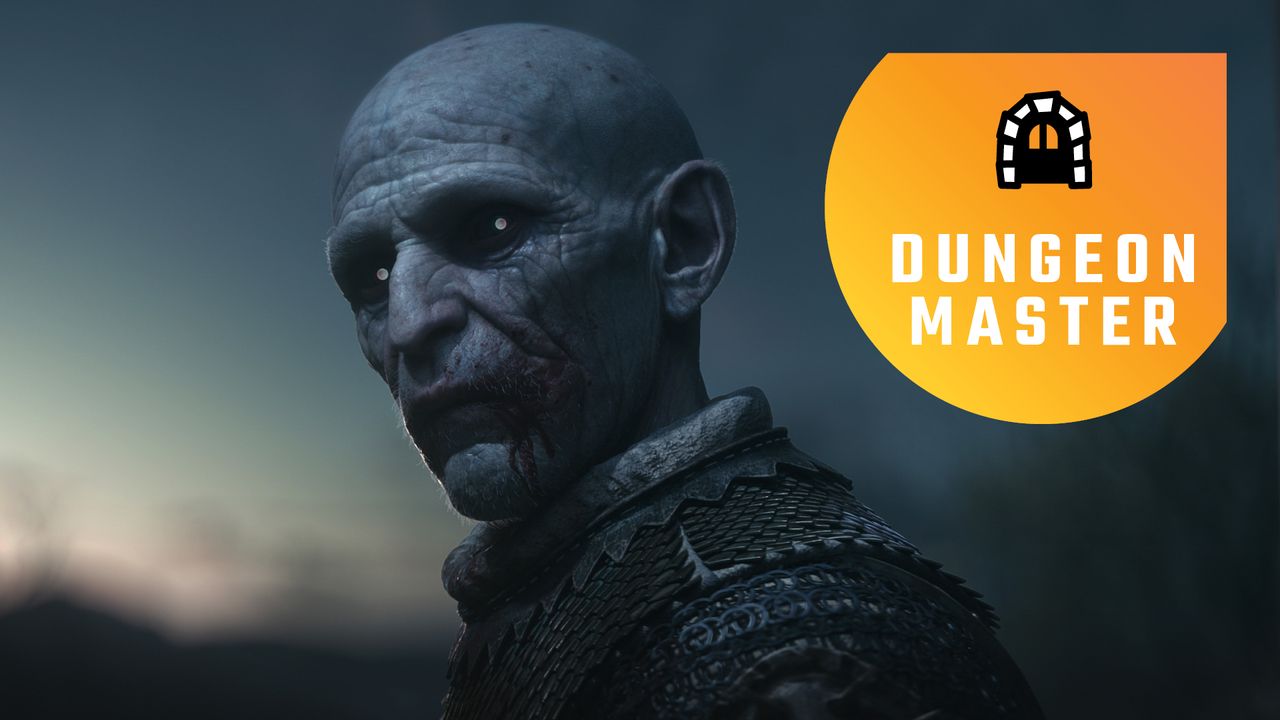
Dungeon Master(Image credit: Future)Welcome to Dungeon Master, PC Gamer's regular RPG column, where Online Editor Fraser Brown delves into PC gaming's most beloved and enduring genre. Grab a seat in our badly-lit tavern and please ignore the goblin puke.The Blood of Dawnwalker is good stuff—over the course of a week I...
Welcome to Dungeon Master, PC Gamer's regular RPG column, where Online Editor Fraser Brown delves into PC gaming's most beloved and enduring genre. Grab a seat in our badly-lit tavern and please ignore the goblin puke.
The Blood of Dawnwalker is good stuff—over the course of a week I drank deeply and had a grand ol' time walking on walls and carving people up with my monstrous claws. But as a choice-laden RPG that promised a lot of agency, it ended up being a bit of a disappointment. There were plenty of choices to be made, but rarely did they leave an impact on either the world or the white bread protagonist, Coen of Laslea.
Rebel Wolves made Coen in the mold of Geralt of Rivia, in that he's a defined character who you can nudge in different directions, but Coen is no Geralt.
By The Witcher 3, CDPR had the two previous games to lean on, along with a boat-load of books, which helped the studio create a well-defined, consistent character no matter what choices you made. Coen, on the other hand, is just at the start of his journey, and in Dawnwalker, his defining feature is that he loves his family.
Look, I don't mind Coen. Will de Renzy-Martin gave a good performance, but it's hard to do much with a character who's just a nice boy. And while the writers did some interesting stuff in regards to Coen's childhood trauma and his obligation to his family—is it love, or is he trapped in a prison of responsibility?—he's mostly just a pleasant dude.
The choices players face fall into the traditional binary category, which in this case means you can either choose a Coen who is willing to do everything to save his family except become a monster, or a Coen who is willing to do everything to save his family including becoming a monster—but is still mostly a good egg.
Unfortunately, this changes surprisingly little. If you let a vrakhir collaborator go free or murder them, it might change how you feel about the character you're playing, but the world itself couldn't care less. Until the epilogue, most choices you make happen in the background, in a vacuum, and the choices you'd expect to have the greatest impact, like how you choose to defeat Brencis, are largely detached from the kind of Coen you've been playing for 40 hours.
I played Coen as wholesome and naive, but I still found myself able to get every ending. It just came down to which route to Brencis I decided to settle on at the last moment. How I comported myself had no impact. And even though I tried to be consistent when it came to how I roleplayed Coen, the voice direction would often take things in a very different direction, transforming, for instance, what appeared to be a neutral statement into an angry criticism.
This is something that often bugs me in voice-acted RPGs. The acting and direction can dramatically change the tone of a line in a way that feels incongruous to the rest of the conversation, and this happens so much in Dawnwalker. It's something CDPR deftly resolved in The Witcher by making Geralt incredibly stoic. Doug Cockle has plenty of range, but when he's playing Geralt it's extremely subtle, which maintains the consistency of each dialogue sequence.
Final countdown
But Dawnwalker has something most RPGs don't: a ticking clock. And while the most obvious benefit is the sense of urgency it blesses the game with, it also seemed like a promising roleplaying mechanic—helping players to better define their version of Coen by determining what's most important to him.
This is felt most keenly in the prologue, before Coen becomes a dawnwalker. You have one day to do some chores before everyone in the village has to visit the church to get drained by their undead rulers. It's impossible to do everything. Do you focus on helping your fellow villagers? Or do you spend the day hanging out with your family? What's most important to your Coen?
Even during this single day, there's a tangible sense of time moving inexorably forwards. For instance, early in the day you'll meet your siblings, who want to spend time with you and go down to the river. If you decline initially, later you'll find that they've gone to the river by themselves, and you can meet them down there, or just continue to ignore them. There's a schedule.
This promise of time's fickle nature is largely done away with after you complete the prologue. You have 30 days to finish the game—if you want to save your family, anyway—but within those 30 days any time pressure is just an illusion. You'll meet people on the second day who want your help, and they'll still be waiting around for you by the 25th day.
In my entire playthrough, outside of the prologue, I only encountered a single quest where I ran out of time. I could have caught up with an old friend who joined the rebels, but once I'd completed all the quests for the organisation, they mobilised to take on Brencis, at which point I could no longer hang out with my pal. According to our guide lead Sean Martin, who completed every quest Dawnwalker offered, he only found one other example of this happening.
So I never had to make any tough choices. Do I hang out with the mean vampire lady and learn more about the monster I'm becoming? Or do I have a magical adventure with the friendly witch who wants to help me save my family? It doesn't matter because I can always do both.
Evening plans
There's definitely an argument for making Dawnwalker's time limit 20 days instead of 30, but I think that might make the adventure feel too rushed. Instead, sticking with 30 days but putting individual quests on a timer would make a lot more sense. This forces you to make decisions about how Coen should spend his time every day, as well as giving NPCs more agency, while still letting you do a lot.
Being made to choose between staging a jailbreak or assassinating a high-ranking soldier is a much more effective way to establish who Coen is compared to the extremely common choice of: drink a barrel of blood or smash a barrel of blood. It also leaves room for meaningful consequences—like discovering the terrible fate of the prisoners if you opted to do the assassination mission instead, and having other characters actually reference it.
What's frustrating is that you occasionally see glimmers of this, like the time of day you do a quest subtly changing how things play out.
When I tried to meet up with the rebels for the first time, I played through it twice: once during the day, and once at night. At night, I found a rebel being harassed by soldiers, who were immediately hostile to me. After I quickly murdered the soldiers, the rebel took me to meet her friends, but I sensed a trap thanks to my supernatural skills, and avoided getting my leg stuck in a snare.
Attempting this in the afternoon, I was actually able to talk to the soldiers instead of killing them immediately. Rather than fighting, I bribed them to leave the rebel alone. But when I was brought to meet her fellow rebels, I walked right into the snare trap.
This was cool! Though it didn't actually matter at all. In vampire form, even though I avoided the first trap, the rebels ended up jumping me and chaining me to a tree. No matter the time of day, the end result was the same.
I also randomly encountered one of the vamp bosses in a cathedral I'd broken into one evening, at which point I could take her out there and then—dropping from the rafters and plunging my claws into her.
Discovering that some characters had lives outside of the quests attached to them was neat, though taking her out early actually undermined the narrative—it meant I would have missed out on all the context that made her character more than simply a ghoulish monster. So I killed her, felt badass for taking her out early, and then immediately reloaded an old save—letting her live until I'd completed the quests building up to our final confrontation.
But both of these encounters gave me a glimpse of what could have been: a game where time forces your hand, where NPCs have routines and deadlines, where it genuinely matters if you do a quest at noon or in the wee hours of the morning. A glimpse of a better RPG.
Clockwork
Most of the time, however, when you choose to do a quest only really changes the mechanics you can take advantage of. Which also means, given the choice, you should usually try to do things at night, when you're stronger and can teleport. Anything requiring witchcraft, meanwhile, can only be done during the day, so you're not really making a choice there. In this way, time becomes a largely perfunctory feature.
When that illusion is broken, The Blood of Dawnwalker becomes incredibly familiar: a checklist of tasks peppered across a big map, which you can largely do in whatever order you fancy. The story is excellent and the fights are a big step up from The Witcher 3, but the narrative, the way Rebel Wolves has constructed the tale of Coen of Laslea, is surprisingly rote.
Ultimately, what we ended up with was another big open-world game not so different from Spider-Man, Horizon or Assassin's Creed, where there are roleplaying nods and lots of time devoted to storytelling, but where the bulk of the agency is mechanical—how you build your character, rather than how you define their personality. Which is fine! It's just not what Rebel Wolves sold us on, or what I was hoping for from a story-driven RPG.
2026 games: All the upcoming games
Best PC games: Our all-time favorites
Free PC games: Freebie fest
Best FPS games: Finest gunplay
Best RPGs: Grand adventures
Best co-op games: Better together
Original reporting appears on the publisher’s site.
Open original article →

