Is Intel back? Company's latest earnings report remarkably different in tone to 12 months ago
From leading technology company to talk of it being sold off to the highest bidder, Intel has had a bumpy ride as of late. The company just reported its Q2 2026 earnings, however, and they're surprisingly upbeat. Revenue, margins, and earnings per share are all above expectations, and even the Foundry business doesn't...
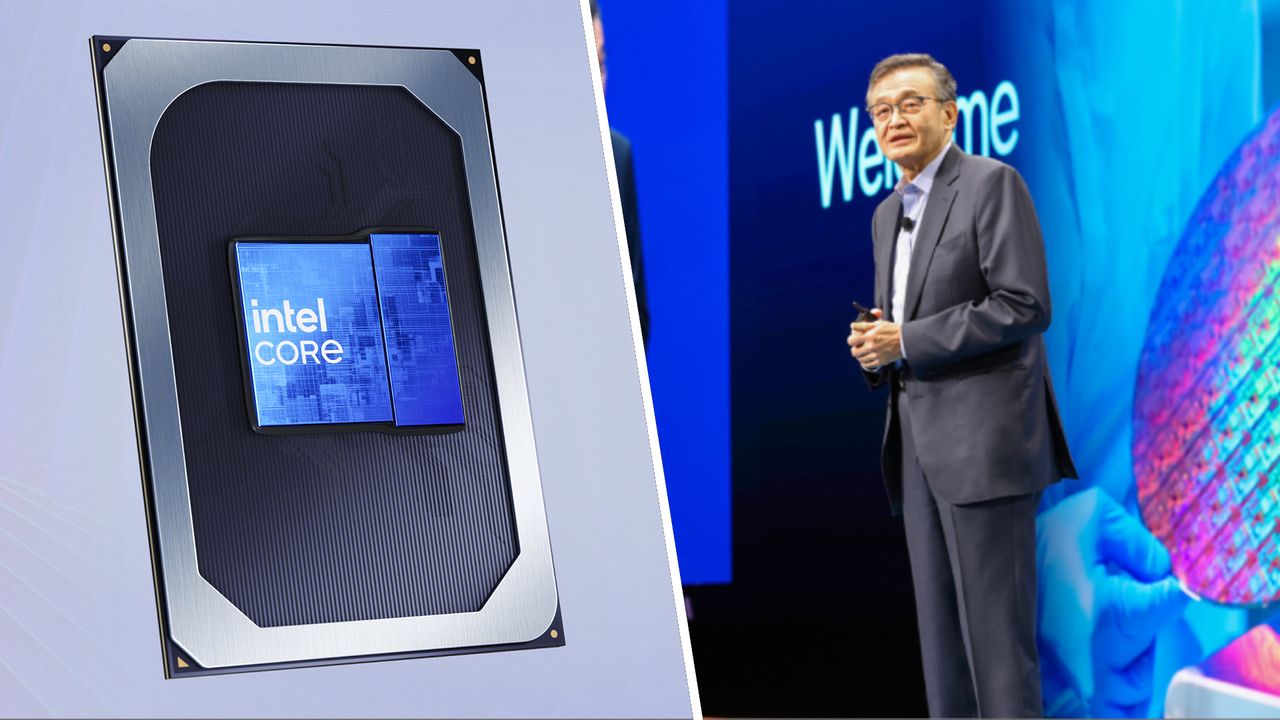
From leading technology company to talk of it being sold off to the highest bidder, Intel has had a bumpy ride as of late. The company just reported its Q2 2026 earnings, however, and they're surprisingly upbeat. Revenue, margins, and earnings per share are all above expectations, and even the Foundry business doesn't appear to be floundering quite so badly as it was once made out to be.
Let's start with Foundry, Intel's manufacturing arm. When Intel CEO Lip-Bu Tan joined the company a year ago, he threatened to halt development of cutting-edge process nodes (if not a death sentence, pretty close to one) if a big customer wasn't found or goals left unmet for the 14A process.
"There are no more blank checks," Tan said at the time. Yet he couldn't sound much more positive about the Foundry business today.
"My confidence in our foundry process roadmap has grown significantly since joining over a year ago. I am more confident than ever of the strategic in significant and unique value proposition of Intel Foundry," Tan says in the earnings call (via Seeking Alpha). "During Q2, our factories across Intel 7, Intel 3 and Intel 18A exceeded internal volume targets, driven by improving yields, better cycle times and increasing wafer starts."
That's good news on Intel 18A, which is used for Core Ultra 3 Panther Lake chips. Though whether Intel would be quite as honest to admit when yields were a bit pants, I'm not so sure. Improvements were recently suggested to have taken place with 18A to reduce wafer-to-wafer variability issues, which sure would help out a lot.
There is also a rumour that Nova Lake processors, destined for desktop, are also returning to Intel 18A following initial planned production using competing foundry TSMC, as Arrow Lake chips currently do. But it's tough to say if there's much truth to this.
Further out, Tan is positive about progress with 14A, the next big leap to come in chip production, which is reportedly on track for risk production in the second half of '27 and high-volume production in '28. It'll be a while before we see anything using this node for our gaming PCs.
"Looking beyond 18A, I'm encouraged by our progress on Intel 14A. Defect density and transistor performance are all outpacing 18A development."
Overall, Foundry work is still very expensive, leading to an operating loss of $2.1 billion in just the three months of Q2. Yet that's an improvement, would you believe, on the previous quarter, to the tune of $348 million.
As for Intel's overall earnings, it's great news there. David Zinsner, Intel CFO, reports revenue up to $16.1 billion, from $13.6 billion in Q1, and 25% up from this time last year. That's apparently the company's best growth since 2011. Revenue was $12.9 billion in Q2, 2025, and back then, Tan and the top Intel crew were sounding a lot less positive about the company's trajectory. This was also a time when it was making sweeping cuts to employee counts.
"Let's say, I also know that turning the company around will take time and require patience," Tan said in 2025. "We have a lot to fix in order to move the company forward, and I'm determined to drive the changes necessary to improve our performance. I'm equally confident that as we execute, we will rebuild this company and have a bright future."
In the latest earnings call, Tan has been thanking employees for their efforts and signalling renewed interest and excitement for Foundry and the company's own products.
"Our advanced packaging and wafer foundry capabilities become increasingly vital assets. Our strategy is clear and pace of execution is accelerating. Opportunities in front of us are substantial. Our strategy is showing early results, and I'm confident that Intel is well positioned to help define the next era of computing."
Intel's CCPG, Client Computing and Physical AI Group, covers chips us lot use for gaming PCs—well, if you're one of the few eschewing AMD for Intel—made $8.9 billion. That's up 15% from last quarter, and Zinsner notes it as "better than our expectations". No wonder, as the memory crisis grips the PC gaming hardware world and won't let go.
We were quite down on the idea of Intel even bothering with an Arrow Lake refresh before the release of the Core Ultra 7 270K Plus and Ultra 5 250K Plus. Yet these chips are actually pretty great for the money—perhaps this is, too, part of a new direction for Intel.
Yet, in less positive news for us lot, it looks like demand is outstripping supply even on the CPU side of things.
"It's important to note that despite exceeding our expectations for wafer outs in the quarter, strengthening demand continues to outstrip our growing supply," Zinsner says. Though he notes that server-chip supply is where all the growth is set to be later in the year, as client-side (including gaming stuff) demand is set to soften as the memory crisis rages on.
Later in the call, Zinsner says, "we can't fulfill the demand… So we'll pivot as much of the production as possible over to CPUs and data centers to try to do our best to catch up to what is a pretty significant difference between our ability to supply and the demand out there."
So, again, that's not great for us lot, but Intel is probably squealing with excitement that it finally has demand to float its big Foundry boat.
Most of all, the tone just feels very different for Intel today compared to just 12 months ago, when arguably it was still making serious cash every quarter but really down in the dumps about it. Tan seems to be less doom and gloom about the Foundry business, the company isn't signalling any sweeping changes to employee counts (which were mentioned in last year's Q2 earnings), and it seems to have demand and at least one more customer lined up for its Foundry service (Fortinet) this week.
Is the company back on best form? No, it's still got a long way to go to outcompete TSMC, AMD and Nvidia in various ways, but it'd be tough to imagine this Intel in 2026 subject to such claims as being bought by one of its biggest competitors, as was rumoured to be considered with some degree of seriousness, in 2024.
Original reporting appears on the publisher’s site.
Open original article →