
We now have independent testing confirming Razer's latest innovative mouse sensor tech does what it says it does
The best gaming mouse on the market right now is the Razer Viper V4 Pro. It's the best because it's light, very well-built, performant, and has great battery life. This last quality—its battery life—is largely thanks to Razer's new FrameSync tech, which is kind of like G-Sync but for a mouse sensor rather than a monito...
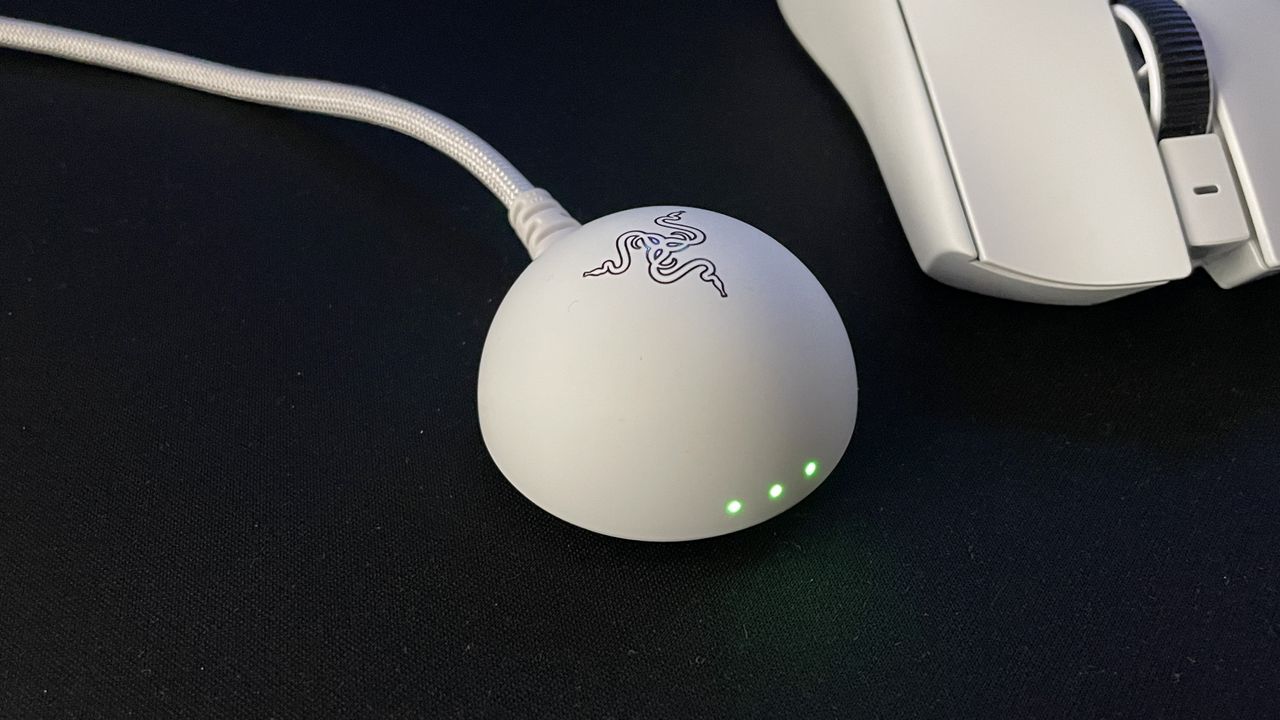
The best gaming mouse on the market right now is the Razer Viper V4 Pro. It's the best because it's light, very well-built, performant, and has great battery life. This last quality—its battery life—is largely thanks to Razer's new FrameSync tech, which is kind of like G-Sync but for a mouse sensor rather than a monitor's refresh rate. And now we have independent testing confirming that the new and innovative tech works as Razer describes it.
We had indirect confirmation of it before just from the fact that the Viper V4 Pro's battery life is so good (180 hours at 1 kHz polling), but it's reassuring and, frankly, just cool to see it confirmed regardless.
With any gaming mouse, there are two main things going on: optical scanning and polling. In the first case, the sensor scans for movement across your mouse pad in many snapshots per second. In the latter, the PC polls for (requests) that movement data from the mouse.
Well, actually, there are three things going on, because in between those two lies the microcontroller unit (MCU), which prepares the sensor data to hand off to the PC when it polls. Razer's innovation with FrameSync is to get all three of these aligned by making the sensor only scan at the same time it's polled for, meaning it can keep things responsive but also keep the sensor scan-outs low and save power.
Anyways, all this is great on paper, but how could we even confirm it? Well, X user and peripheral YouTuber piaknow has figured it out and put FrameSync to the test. Using a cornucopia of wires and a Rigol DS1102Z-E oscilloscope, they confirm that "Razer's FrameSync is REAL."
Razer's framesync is REAL pic.twitter.com/D0jdc12hncJuly 23, 2026
They explain: "Yellow line shows the USB signal and blue line shows the sensor light source. The phase between them being fixed shows that they are actually synchronized, as advertised."
So yep, it seems it's true: Razer FrameSync does, in fact, sync the sensor to the polling rate. Although it's worth noting that one commenter claims they get some small deltas, and piaknow confirms "I do get 0.25 ms intervals periodically... but because the counts are doubled at the same time, maybe it's simply packet loss due to some type of periodical extra process?"
I'm not the one with the oscilloscope, so I certainly can't say, but at any rate the periodical deltas don't seem too big, and certainly not enough to throw off the overall oscilloscope picture and the fact that FrameSync is seemingly doing what it says on the tin, just perhaps not absolutely perfectly.
That being said, there's apparently still a DPI downshift problem, which I've explained previously. Sensors, eh, there's more to them than we might think! For my part, I haven't noticed any issues with the Viper V4 Pro's sensor, and it's great to see some genuinely new tech confirmed independently.
Original reporting appears on the publisher’s site.
Open original article →
