
'If you're designing an RPG, you have to go back to the source:' The post-apocalyptic RPG Entropy takes notes from Fallout and a long-abandoned Warhammer spinoff
The early access RPG Entropy is a very different beast to its developers' previous work. Dread Delusion was a shockingly good homage to first person RPGs like King's Field or The Elder Scrolls, while this new game is distinctly JRPG-inflected, nailing a lot of the feel and intangibles of something like Final Fantasy 10...
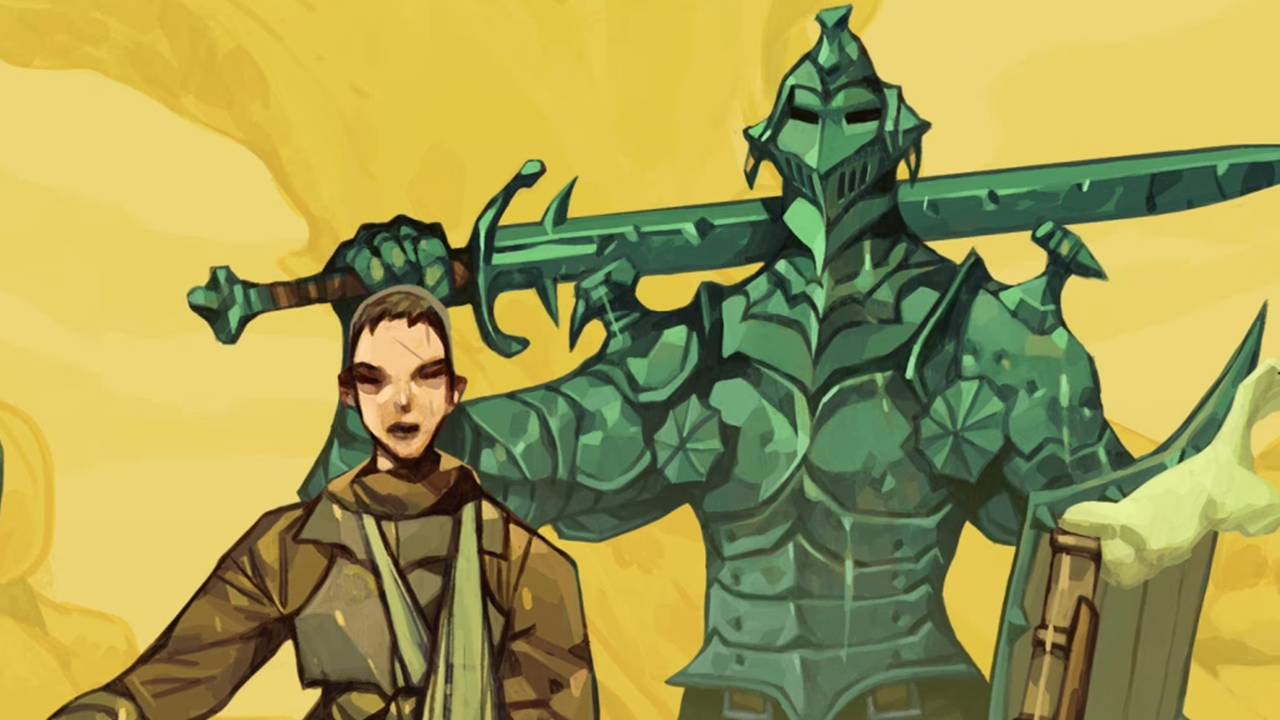
The early access RPG Entropy is a very different beast to its developers' previous work. Dread Delusion was a shockingly good homage to first person RPGs like King's Field or The Elder Scrolls, while this new game is distinctly JRPG-inflected, nailing a lot of the feel and intangibles of something like Final Fantasy 10 or Lost Odyssey.
But you can't just put it into the JRPG bin and call it a day. Entropy boasts a large party size for tactical battles, permadeath, locational damage, as well as an approach to reactivity and storytelling that feels more PC gaming than PS2 gaming. When I spoke to lead developer James Wragg recently, he told me that's very deliberate.
"In many ways, if Dread Delusion was my take on The Elder Scrolls, then this is my take on Fallout," Wragg said. "The original Fallout, Fallout 1, is one of my favorite games, and we're riffing on that quite a lot with Entropy."
Having played Entropy's demo and a bit of early access, I immediately got what he meant. Part of that inspiration is visible in the locational damage system, similar to OG Fallout's called shots (what would eventually become VATS in the 3D games).
You can incur a penalty to accuracy to target a specific limb or zone on an enemy, to the benefit of greater damage or inflicting a debuff. Wragg provided the examples of how it might work in more advanced battles: disarming a foe with an especially powerful weapon, or shredding the bulbous Resident Evil weakpoint of a mutated enemy.
Entropy's specific flavor of post-apocalypse also rhymes with Fallout 1—it's desolate and in your face in this similarly striking way, with what little levity there is feeling like a remnant of the pre-collapse world, such as the play in Entropy's opening scene. Another major inspiration for Wragg: Mordheim, a small-unit tactics spinoff of Warhammer first published by Games Workshop in 1999.
Old school
"What I love about tabletop is, it's just pen and paper," Wragg said. "You can house rule stuff as much as you want, so we've got a bunch of custom rules in our [Mordheim] campaign. It really encourages creativity because you make your little guys and you customize them based on how you load out your character.
"Something like Mordheim has so much character customization—almost beyond most video games—because it's tabletop. The developers never actually had to code in the graphics of swinging all these different weapons, and I think that freedom I found really inspiring."
Wragg noted that Entropy's low-fi graphics allow for a similar level of leeway: His team can implement a large number of unique weapons and statuses without each one requiring (or having to seamlessly mesh with other) labor-intensive assets and animations. "I think if we were working in more high fidelity, we would have had to rein in that ambition a bit" said Wragg.
This more tabletop-oriented style of RPG seems to be something of a full circle moment for the developer. He told me that, as part of his earliest hobby-level development on what would become Dread Delusion, he began seriously boning up on tabletop history and how it influences digital RPGs.
"I just found myself being like, why? Why do RPGs do these things?" Wragg told me. "If you're designing an RPG, you have to go back to the source on tabletop games because so many of the systems that exist within modern AAA RPGs, they originated with Dungeons & Dragons and all those other spin-off games and war games.
"It just comes from the core of wanting to understand how games tick. It just feels natural to go back to the roots of tabletop role playing games if you want to work on a role playing game, because they really haven't deviated all that much from them, even at this point."
Entropy is available now in early access on Steam, and it also has a substantial free demo. Elsewhere in our conversation, Wragg talked about how he and his team just love sidequests too much to make a game with a smaller wordcount like they originally planned.
2026 games: All the upcoming games
Best PC games: Our all-time favorites
Free PC games: Freebie fest
Best FPS games: Finest gunplay
Best RPGs: Grand adventures
Best co-op games: Better together
Original reporting appears on the publisher’s site.
Open original article →

