
AMD's new 'Gainsborough' APU rumoured to be the chip that powers the long-awaited Steam Deck 2
The original Steam Deck went on sale about four and a half years ago. And there hasn't been any clear indication that a true second-gen handheld from Valve is imminent. Until now, that is.YouTube channel Moore's Law is Dead has a new video explaining how a rumoured AMD APU known as Gainsborough is likely to be the chip...
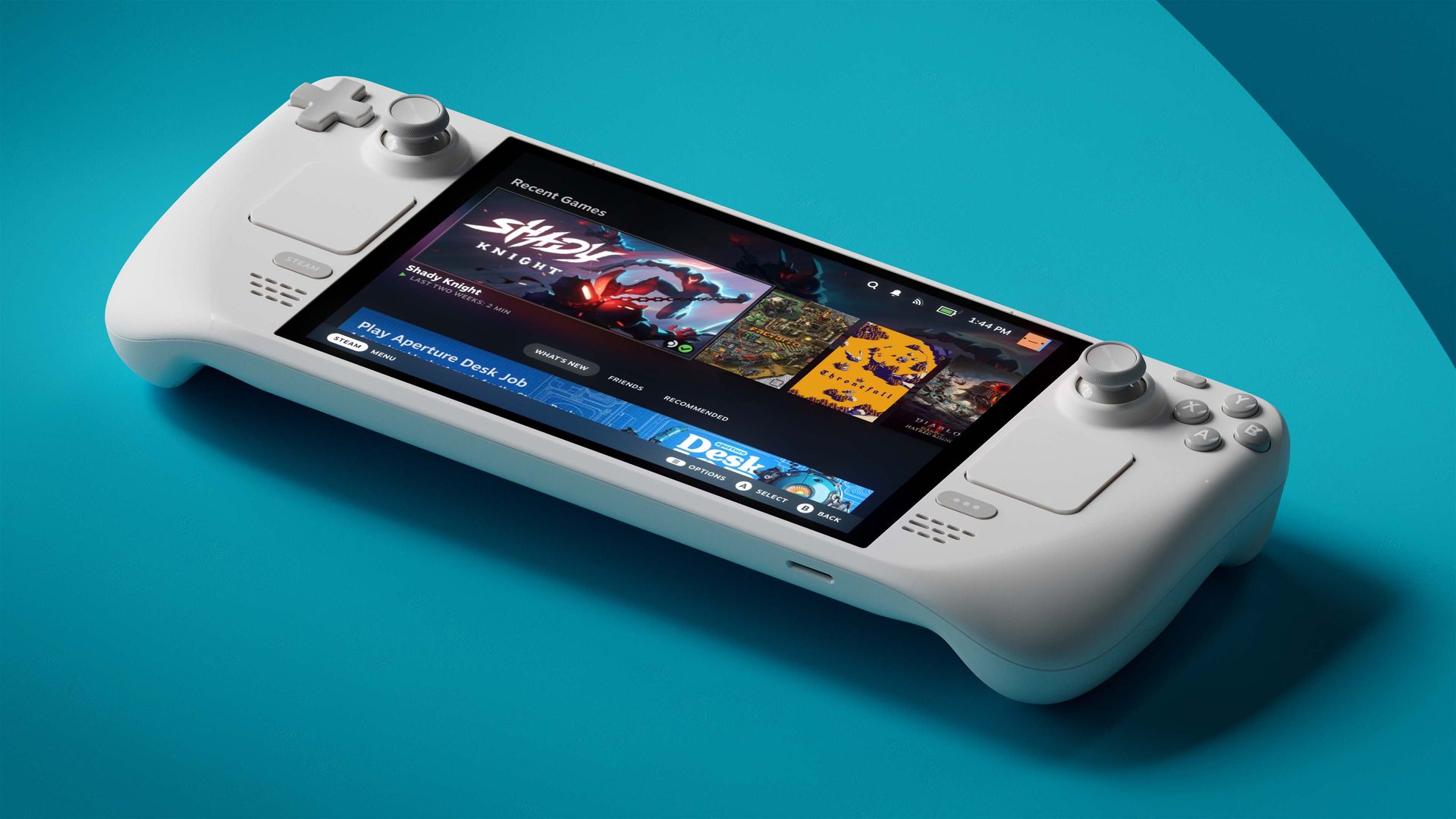
The original Steam Deck went on sale about four and a half years ago. And there hasn't been any clear indication that a true second-gen handheld from Valve is imminent. Until now, that is.
YouTube channel Moore's Law is Dead has a new video explaining how a rumoured AMD APU known as Gainsborough is likely to be the chip that powers the next-gen Steam Deck 2 handheld.
The MLID channel is admittedly not everyone's cup of tea, but has had some notable hits over the years when it comes to leaks and rumours. With that caveat covered off, what do we know about Gainsborough?
First, the codename does actually make sense. The OG Deck's APU was known as Aerith, as in the character from Final Fantasy 7. And Aerith's second same is, of course, Gainsborough.
In terms of the technicalities, there isn't a huge amount of information. However, one critical tidbit is that it will be built on TSMC's N3P node. That's TSMC's fanciest, most advanced and most efficient version of its N3 family of chip production nodes. That matters because it should make for a more efficient chip for a handheld where battery life is critical.
The immediate question is whether this makes sense given what Valve has said about a next-gen Deck. Late last year, Valve explained how it wanted the Deck 2 to be a really major leap forward over the first-gen handheld, not just an incremental step.
"We're not interested in getting to a point where it's 20 or 30 or even 50% more performance at the same battery life. We want something a little bit more demarcated than that," Steam Deck designer Pierre-Loup Griffais said at the time.
With that in mind, you might wonder whether any TSMC N3 node is advanced enough. After all, Apple has just released its new A20 Pro and M6 chips on TSMC's latest N2 silicon. Could N3 actually be too old hat for the Deck 2?
It's worth bearing in the mind that the OG Aerith chip for the Steam Deck was built on TSMC 7 nm silicon. That's two full node generations behind TSMC N3.
As for the rest of the specs, MLID reckons Gainsborough will jump on the AMD Zen 6 and RDNA 5 bandwagons. Those are AMD's next-gen CPU and GPU architectures, respectively, and also the technologies expected to be used for both Microsoft and Sony's next-gen consoles. Oh, and AMD's next-gen PC hardware, of course, including a new generation of graphics cards that could begin to appear next year.
One reference point here is the AMD "Canis" APU, which is the rumoured chip for the upcoming Sony PS6 handheld. That is said to pack four Zen 6c CPU cores, two Zen 6 low power cores cores, 16 RDNA 5 GPU CUs, plus a 192-bit memory bus. The Deck 2 could well sport a similar specification.
Aerith in the OG Deck (and indeed the slightly revised Sephiroth APU in the Steam Deck OLED) has eight RDNA 2-spec CUs. When you consider that RDNA 5 should deliver CUs that are significantly more performant than those in RDNA 2, then factor in a doubling of the CU count, plus no doubt higher clock speeds, well, you arrive at a mobile GPU that seems likely to deliver on Valve's demands for that true step change in performance.
As for when any of this might translate into a Steam Deck 2 you can actually buy, MLID says the Gainsborough chip itself should be ready late next year or early 2028. We suspect Valve probably isn't in a major hurry, what with the ongoing AI-fuelled RAMpocalyse and the carnage that has already inflicted on its other recent hardware launches, most notably the Steam machine.
In many ways, then, the later Valve launches the Deck 2 the better, at least in terms of giving the computer chip and memory markets a chance to recover from all the AI madness. But maybe late 2028 now looks like a reasonable expectation. Here's hoping it happens and if it does that memory prices have normalised by then.
Original reporting appears on the publisher’s site.
Open original article →