
All hail the long steam machine, Pimax's new SteamOS-ready mini PC
You could say Pimax is copying Valve's homework with its new mini PC, the Spation. Though the Steam Machine is merely a black box, so you could say it also copied any number of other miscellaneous black rectangles itself; the Xbox Series X among them. Nevertheless, this is one similar-looking living room machine, and P...
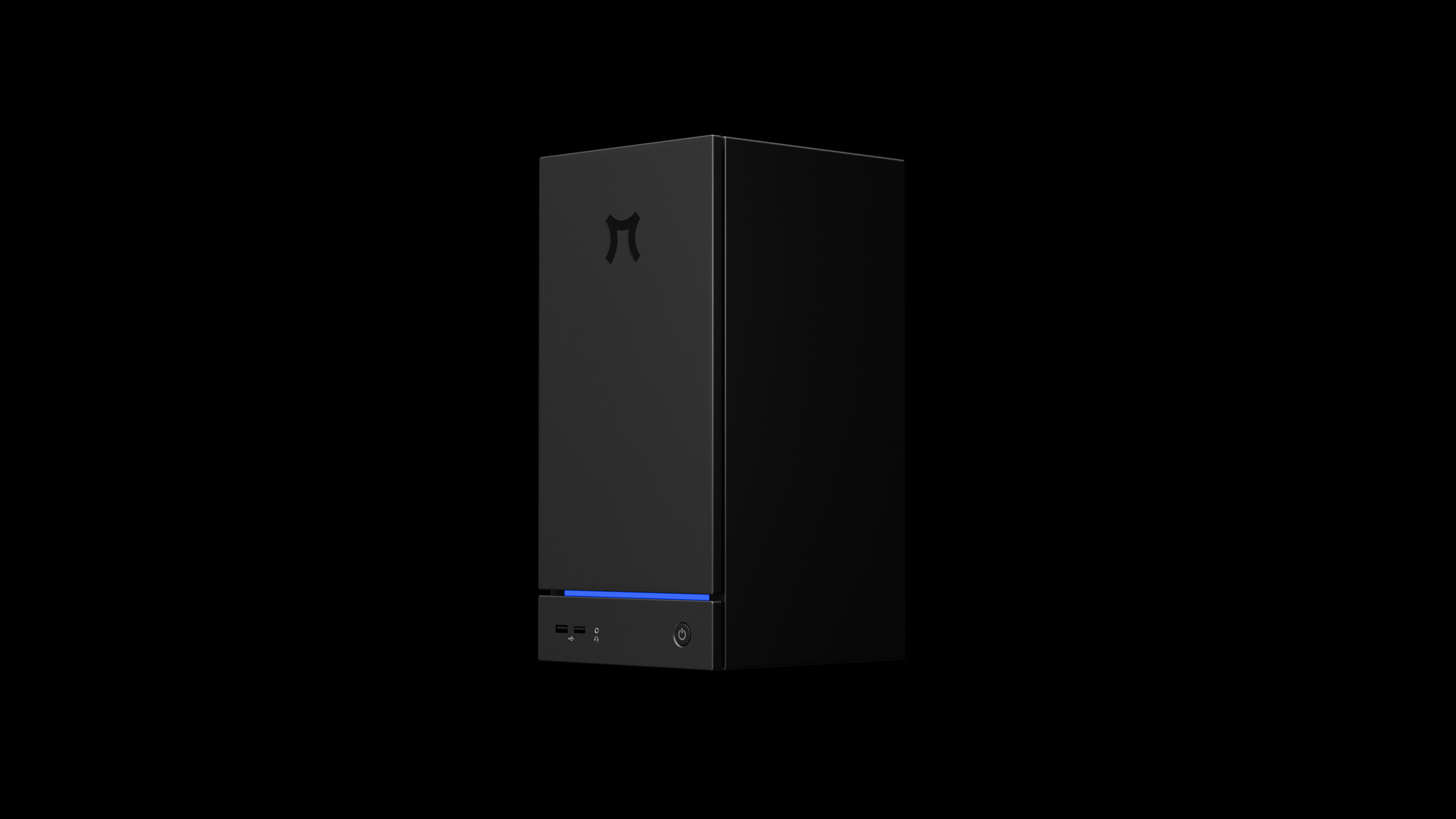
You could say Pimax is copying Valve's homework with its new mini PC, the Spation. Though the Steam Machine is merely a black box, so you could say it also copied any number of other miscellaneous black rectangles itself; the Xbox Series X among them. Nevertheless, this is one similar-looking living room machine, and Pimax is even pitching it with SteamOS.
Pimax's machine is a mini PC with a whole bunch of power behind it. Pimax says it comes with either an RX 9070 XT or RTX 5070 Ti, and a Ryzen 7 9800X3D.
It packs in 32 GB of DDR5, a 1 TB SSD, and a 1000 W SFX PSU. It also supports Wi-Fi 7, Bluetooth 5.4, and comes with 2x DisplayPort 2.1, 1x HDMI 2.1, 1x USB4, and 6x USB 3.2 Gen 2 ports.
So, it's much more capable than Valve's li'l box, though I shudder at the thought of the price. Pimax has not yet announced a price or launch date.
You can see how it all slots together under the removable rear panel in the render provided by Pimax below.
Most of the I/O is accessible at the back of the device. Slightly above and behind that is what looks to be a Mini-ITX motherboard with two DIMMs installed, presumably with some sort of solution to shift the rear I/O. Above that, the power supply, with a fan mounted above it. The GPU sits flat on the reverse of the unit, using a PCIe riser cable.
My only concern is how well that graphics card can breathe in there, and more broadly for temps, but there may be yet more fans within the unit. The front panel looks to be removeableâjust like the Steam Machineâwith some venting in there for the GPU.
It looks like a pretty smart layout, and not totally dissimilar to a Fractal Terraâthe case I use for my own mini PCâsat upright. Pimax plans to offer a barebones kit that will require a user to install their own GPU, storage, and memory, which means at least parts of it are set to be pretty standardised.
The idea behind the Spation is to be more powerful than a gaming laptop to power high-end PC VR, in a smaller size than your average PC. Thereby easier to shift besides your TV unit for a spot of virtual reality in the evening. There is a bit of a gap in the market for this sorta thingâbeyond simply building your own Mini-ITX gaming PCâas the real Steam Machine has been known to struggle with VR due to its Arch-based SteamOS.
Though that might also be the case for the Spation. Pimax is pitching it with both Windows and SteamOS support. It is just a regular PC, after all, so there's nothing stopping you from loading SteamOS onto anything with compatible hardwareânamely AMD's gear, as Nvidia GPU support is an ongoing process in SteamOS. Which you choose should probably depend on whether you are planning to use it for VR or not. Even though the Steam Frame has shown what Linux can do in VR, and Pimax says it's bringing Pimax Play to Linux as a dedicated client, it does feel like Windows remains the easiest option.
Original reporting appears on the publisher’s site.
Open original article →