
South Korea's president declares that it will invest over $580 billion in its AI chip industry, with Samsung and SK hynix coughing up most of the money
When it comes to making bank off the currently insatiable demand for AI hardware, the companies with the biggest, ear-to-ear grins are those that make the processors, memory, and storage chips for such systems. In the case of the latter two, it's been so highly profitable that they have collectively agreed to substanti...
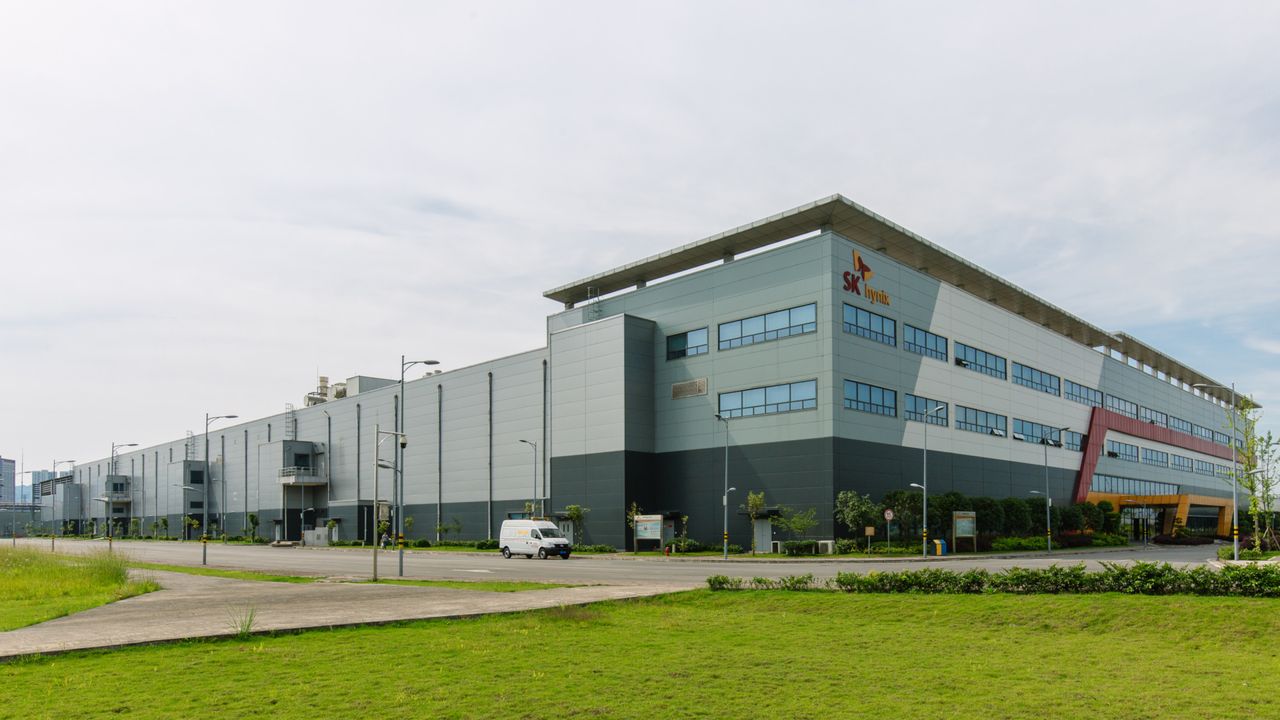
When it comes to making bank off the currently insatiable demand for AI hardware, the companies with the biggest, ear-to-ear grins are those that make the processors, memory, and storage chips for such systems. In the case of the latter two, it's been so highly profitable that they have collectively agreed to substantially fund a drive by South Korea's government to "secure the core elements of AI faster than any other country."
A report by Reuters has all the pertinent details, but the gist of it all is this: President Lee Jae Myung declared that around 900 trillion won ($583 billion) would be invested in new chip-making facilities, earmarked for sites in the southwest region of South Korea. According to industry minister Kim Jung-kwan, 800 trillion won would come from Samsung and SK hynix.
These two companies hold around two-thirds of the global DRAM market share, and along with the US-based Micron, they're the only companies that produce HBM (high bandwidth memory) modules for Nvidia's AI processors.
By any measure, $583 billion is a vast sum of money to stump up for AI chips, even if it's spread out over a decade or so (exact timelines for the investment weren't stated in the president's declaration), and it makes Taiwan's $250 billion promise look relatively small in comparison. It's worth noting that South Korea's 2025 GDP is estimated to be in the order of $1.8 trillion, so you're looking at a commitment that's around one-third that amount.
It's not just for new chip foundries, of course, as Samsung and SK hynix will need to buy land and secure sufficient energy and water supplies, as well as human resources to build and operate it all.
But one question remains unanswered, possibly because there is no answer for it right now. What happens if the demand for AI hardware suddenly collapses? While there's no doubt that the AI boom has been highly profitable on the hardware side of things, it's a different story for those who are using it to power their AI services, and even less so when one heads to the AI frontlines.
There's an element of risk with any investment, but with AI, not only is the scale of the funding greater than anything seen before in the world of tech, its future is also very hard to predict with any degree of certainty. At the moment, many companies around the world are implementing AI into workflows, partly because of the potential productivity gains, but mostly because it's affordable.
Unless the processing of tokens can be made substantially cheaper, sooner or later, companies such as OpenAI and Anthropic will have to increase their usage fees to balance their bank accounts. After all, Nvidia, Microsoft, Meta, et al. only have so much capital that they can fling at such AI model makers, and no business can maintain profit losses indefinitely.
If the demand for AI hardware remains high over the next ten to 15 years (the minimum amount of time it will take Samsung and SK hynix's new facilities to come online and hit production targets), then South Korea's investment will likely secure it as the country that holds most of the cards in the AI profit wars.
Should the alternate scenario transpire, then the consequences for the global economy could be severe. Nobody wants that to happen, but at the same time, the tech industry as a whole can ill afford to weather the global memory crisis for ten years. South Korea's massive investment plan is good news for somebody—it's just not certain who exactly that is.
Original reporting appears on the publisher’s site.
Open original article →

