
Onimusha: Way of the Sword review
Miyamoto Musashi, the legend goes, defeated his rival Sasaki Ganryu with a single blow to the head using nothing but a crude wooden sword carved from an oar.Need to KnowWhat is it? The art of swordplay, revolutionized after the discovery of physicsRelease date September 3, 2026Expect to pay $70/£60Developer CapcomPubli...
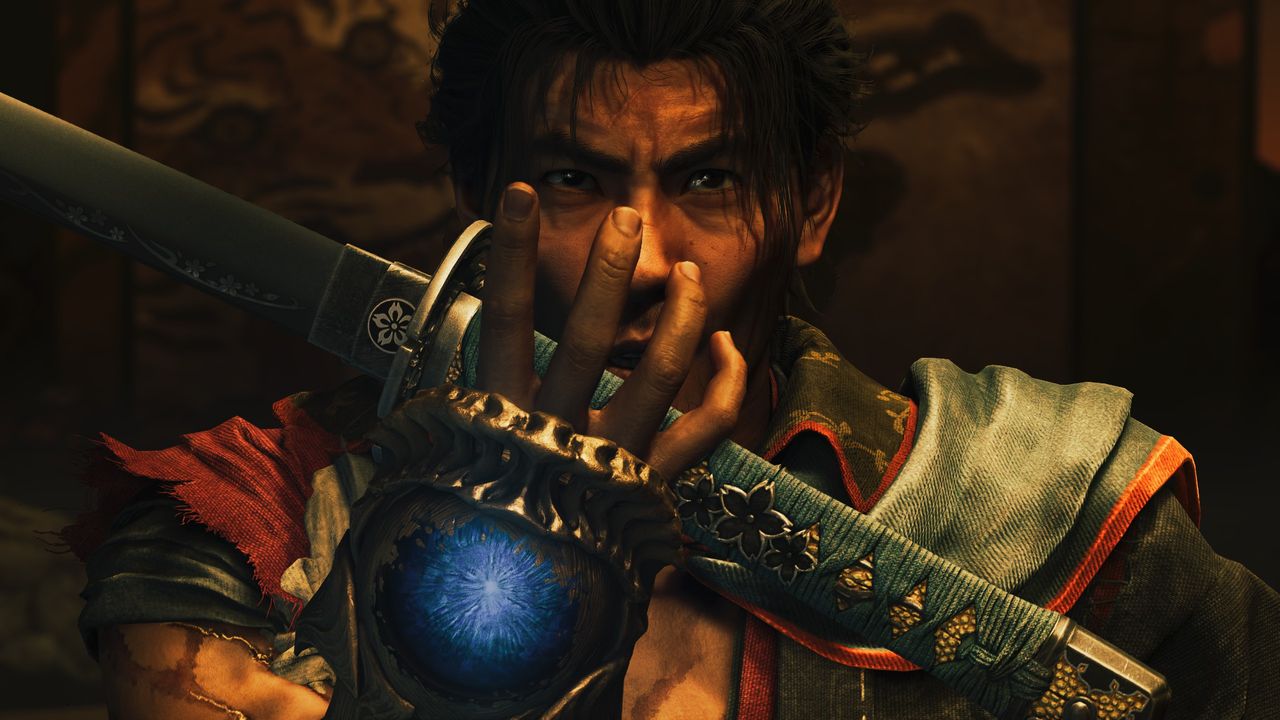
Miyamoto Musashi, the legend goes, defeated his rival Sasaki Ganryu with a single blow to the head using nothing but a crude wooden sword carved from an oar.
Need to KnowWhat is it? The art of swordplay, revolutionized after the discovery of physics
Release date September 3, 2026
Expect to pay $70/£60
Developer Capcom
Publisher Capcom
Reviewed on Radeon RX 9070 XT, Intel i5-13600K, 64GB DDR5
Steam Deck Playable
Link Official site
This is, of course, ridiculous: In truth Musashi first parried dozens of Ganryu's strikes, softened him up with a flourish of reflex combos, and then ran him through with the Flashing Void, a spear harnessed from the power of lightning in an ancient demonic hellforge. He was perhaps a bit too modest to recount the more baroque details of the battle in his memoirs, but blessedly Capcom is less bashful.
Onimusha: Way of the Sword whips ass.
I've been told that two words don't qualify as a review, though, so let's talk caveats. I'd put the action in this long, long-awaited reboot up against the best Capcom's ever made, though it's spread out across a 10K that should be a sprint. It begins with a foundation of weighty swordplay that made me feel the muscle and bone behind each strike, and eventually challenged me to parry increasingly ostentatious bosses with a patience and precision I haven't exercised since Sekiro. The reward each and every time was the exhilaration of locking in and nailing the timing, graduating from a quick game over to a calm, clean execution.
Well, not that calm—other than the adrenaline a few of Onimusha's harder fights left pulsing in my hypothalamus, this game sets itself apart from FromSoftware's taciturn tone with a swagger reminiscent of early 2000s Capcom. One of its great strengths is the use of legendary actor Toshiro Mifune's likeness as Musashi, an act of digital necromancy that could've easily left a rotten stink if it wasn't handled precisely this deftly. But it doesn't just work, it makes the game.
I loved Onimusha's lavishly animated cutscenes just as much as the combat: Musashi is brash, fiery, and incredibly expressive, tilting his head with a cocky boast, cartoonishly gawping at monsters, contorting his whole face into a snarl when he gets his blood up. A throwaway moment where he scratches the back of his head exactly like the real Mifune does so much to make Way of the Sword feel like an homage to bloody '70s samurai flicks down to its bones.
Onimusha needed to nail that authenticity, because the dozen samurai roles I've seen Mifune in add up to significantly less screen time than the 35-odd hours I spent finishing the story and a healthy chunk of sidequests. Too long? Yep! Unfortunately the Capcom that made Resident Evil 9 and Pragmata lean, briskly paced adventures wasn't talking to the Capcom that thought Onimusha needed a dull hub world, grindy crafting materials and bosses that show up for an encore to an encore to an encore well after I stopped applauding.
Kyoto drift
There's a distinct whiff of modern videogame bloat to Way of the Sword compared to the tight 3 ½ and 8 ½ hours of the now-vintage Onimusha 1&2. It spends its first third steadily introducing new combat mechanics and devoting quite a bit of time to how a young, not-yet-famous Musashi finds himself wearing a magic gauntlet that absorbs the souls of the demonic Genma trying to move into east Kyoto. The initial pacing means it's slow to really show its teeth, though I found that a nice change from the soulslikes that are now legion.
Onimusha wants you to feel cool from the start: Duels with the basic Genma tend to feel more empowering than challenging, which narratively dovetails nicely with Musashi's gauntlet steroids but means only boss fights really allow the swordplay to shine until the midgame.
In between major plot beats that whisk Musashi off to new environments like a bamboo grove and a sunset-drenched mountain fortress, there's busywork to do in feudal Kyoto. And it sure is bogged down by dreary, muddy streets that immediately blur together. There are engaging moments here and there when a trinket on the other side of a wall enticed me to find a ladder that led to a hidden crawlspace to a gate I could unlock from the inside, but these detours never really rose above the bar of not outright boring.
Kyoto mostly exists as a vessel for upgrade materials, scattered in plain sight and squirreled away in corners that are occasionally more fun to track down. These items and the gangs of Genma roving the streets respawn periodically, which ended up reinforcing how insignificant most of my time spent in Kyoto felt. Same with the trifling basic sidequests, delivered by nameless NPCs that give you an icon on the map; there's not even an attempt to offer hints for you to puzzle out a location yourself.
Oni-curious
You can sense the nervousness behind this whole side of the game: that players needed something to keep them playing longer, so how about collecting dozens and dozens of pieces of leather and iron to upgrade the stats on their gear 2% at a time? What about an exciting boss that gets some new moves the second time, and then really drags down the pacing each time you fight it again? Even Capcom seemed to know it didn't nail the balance here, considering how many times the writers have Musashi grumble about having to fight someone he's already whooped.
Strip out 90% of the upgrade economy and corresponding time spent in Kyoto and Onimusha: Way of the Sword would be a much leaner game. And a better one, with just a brisk hour or so of scraps in between showstopper bosses.
What saves Kyoto from being a total waste are the Curious Cases, a fancier set of sidequests delivered to Musashi by poet Lady Murasaki, a pioneering 11th century author.
These vignettes are a touch more involved, calling on a recurring cast of Kyoto's citizens to deliver morbidly funny Japanese fables. Each concludes with Murasaki commenting on the story as she writes them into legend. I rarely go digging into a menu to read up on extra lore, but I devoured every bit of it in Onimusha—the care put into the mythology does so much to make this feel like a jidaigeki historical drama as much as an action game. There are only a handful of Curious Cases in the whole game, yet they each left more of an impression on me than any sidequest I encountered in 25 hours with last year's Assassin's Creed Shadows.
Sword is life
Onimusha's crafting-driven bloat would've annoyed me more if every boss that awaited wasn't such a thrill to take down. The heavy clank of steel-on-steel and the way the camera pivots around Musashi as he redirects the enemy's blade in a shower of sparks was still triggering something primal within me 30 hours in. (Should I buy a sword? Surely a katana would fix me.)
The elegance of the combat is that each duel demands the same thing—precisely parrying a few times to build up a "burning" meter for your blade to deal more damage, then using the deflect technique, an extra button press with slightly more generous timing, to sap the enemy's stamina and deliver a critical hit—but executing that plan is never so simple. When I fumbled my parry timing and blocked instead, bosses punished me by smashing my own stamina meter, turning the fight into an oh shit oh hell panic.
Take one of the minibosses that Onimusha reheats three too many times: Byakue, a demon carrying a giant axe whose entire body is covered in ofuda talismans. When Byakue broke my guard, its axe split in half to reveal a jagged maw that sucked down souls and sent it into a primal rage. I learned to start watching for new moves in that state: a grab where it used its flowing paper-flesh mane to bludgeon me, and an explosive slam that caused the earth to erupt with poisonous Malice.
Where other action games like Nioh ask you to nail multiple complex button inputs in the heat of the moment to parry, recover stamina, and swap sword stances, Onimusha's happy to keep swordplay simpler mechanically but more cinematically rewarding. Crossing blades will either prompt you to mash the attack quickly to overpower your enemy or to lock into a brief minigame of alternating light and heavy attacks until you outmaneuver them and deliver a vicious blow; both moves are easy but look and feel badass thanks to the detailed physics and animations that send enemies staggering or leave them bisected anime-style, crown to jewels.
What this Onimusha does differently from every other game of its kind is embrace the physicality of the brawl. The way Musashi braces for an impact; the way he shifts to an overhead strike for a heavy attack that's easy for enemies to sidestep if you don't lead with a lighter horizontal swipe; the way walls and boards you can pry off the ground are an opportunity to deal quick and ruthless stagger damage. Way of the Sword toys with the idea of making these physics interactions its specialty, but it never really commits to them, with boss fights mostly falling back on more straightforward 'git gud' tests of patience and timing. It leaves a lot on the table for a sequel to build on, but even with their full potential unrealized the physics still make Musashi feel like he has a body. Literally built different, etc.
Strategic complexity comes mostly from the secondary weapons, Musashi's Oni Armaments; most of them play a key role, from peeling health or power souls off an enemy to smashing half their stamina meter in a single hit. It's so tempting to wait to use these until the perfect moment, but holding onto that meter just a little too long risks a boss getting in a clean hit and stealing the souls for themselves. It's a dance of patience and aggression that was still tripping me up when I had a boss down to the last 10% of their health, then suddenly lost my rhythm and was dead seconds later.
There's a fantastic clarity to all of the action: you could teach a Videogames 101 course using the boss attack patterns (tricky, but always learnable) in Way of the Sword, and the instant post-meter burn regret of popping too early. This is the kind of stuff Capcom's designers have excelled at for decades, just with a bit more emphasis on patience and timing than usual.
The panache and silliness of old Onimusha still comes through in much of the character design, too—just wait for the boss who's basically a demigod rockstar riffing on the Japanese high school delinquent trope, exaggerated pompadour and all.
Samurai spirit
I was pleased by how beautifully this action ran on my 9070 XT, often hitting 120 fps with all the settings turned up and AMD FSR4 set to quality. Other than brief hitches when loading or transitioning between cutscenes, performance is fantastic. And I think this is the best-looking RE Engine game Capcom's made when it comes to the facial animations, art direction and cutscenes—which makes it an extra shame that so much of the game takes place in a perpetually overcast, muddy Kyoto. Truly a baffling choice.
A shorter, more linear Onimusha with less time spent picking up boring junk would've truly been all killer no filler—but even with the filler, it's going to be a strong contender for the best combat of the year. But that's a box I really expected Capcom to check from the moment it brought Onimusha back to life.
More impressive is the lengths to which it goes to live up to Toshiro Mifune's resurrection. This series started with the fun but shallow premise of digitizing a famous actor as a samurai. Way of the Sword asks how to imbue that idea with purpose: What if the emotional core of the story revolved around Musashi's fabled journey from arrogant vagabond to a noble warrior? What if one of the other figures it plucked from history was the inventor of Kabuki, at this point a ferocious young girl who cares more about the people of Kyoto than Musashi does? What if the big bad, another famous Japanese warrior, was an absolute motherfucker? This is the most fun I've had with a game's alternate history since Command & Conquer Red Alert's campy FMVs, and pushes the game up a tier from period action game to proper period piece. Bring on Way of the Two Swords with haste.
Original reporting appears on the publisher’s site.
Open original article →