Nvidia puts its money where its mouth is on open weight AI, moving to buy Hugging Face for $13 billion
Nvidia has just announced that it intends to acquire Hugging Face, the biggest open platform dedicated to developing machine-learning applications. Considering Nvidia has been all-in on AI for the past few years—to the point that I barely remember the last time the company even mentioned gaming in an earnings call—it's...
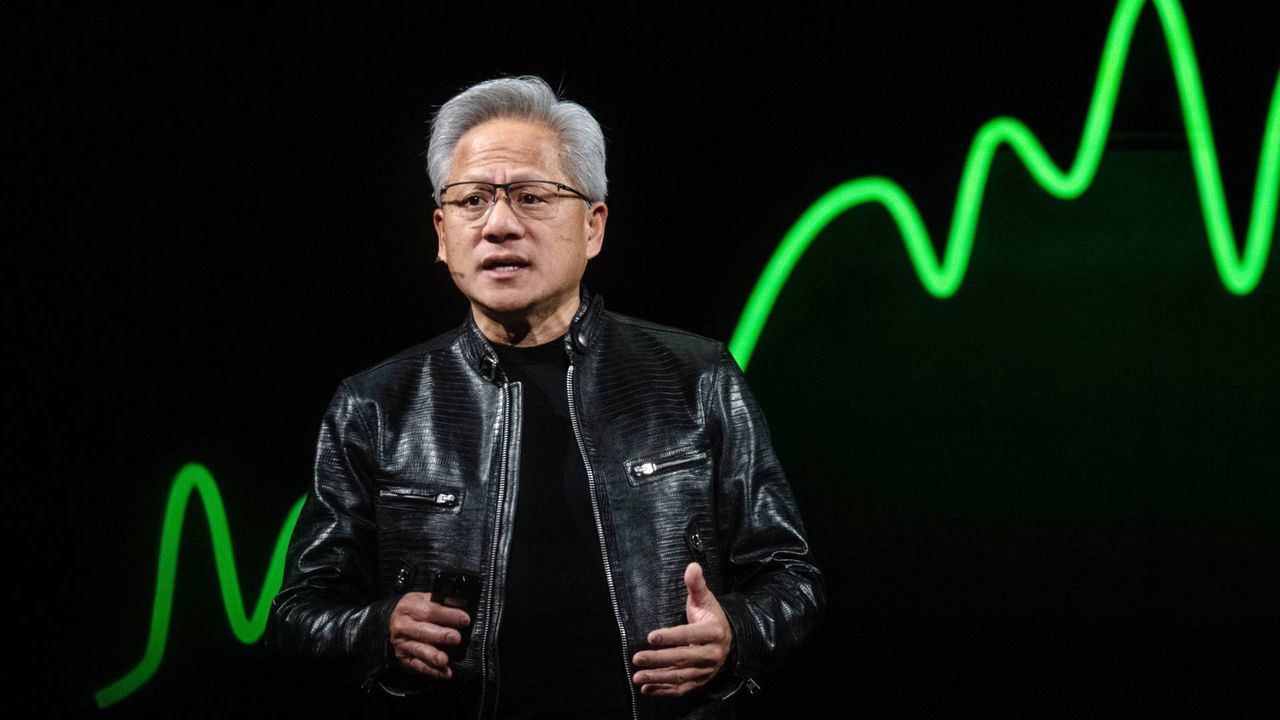
Nvidia has just announced that it intends to acquire Hugging Face, the biggest open platform dedicated to developing machine-learning applications. Considering Nvidia has been all-in on AI for the past few years—to the point that I barely remember the last time the company even mentioned gaming in an earnings call—it's hardly a surprising move.
What did encourage a sharp intake of breath from me though was the price of this purchase; Nvidia will buy Hugging Face for a total of $12,930,300,000. $11.9 billion of that will go to Hugging Face's investors, while employees that join Nvidia will be offered an equity-based retention program of up to $1 billion, according to Reuters. But even though there's billions of dollars in the mix, that doesn't mean the walls are about to come down around Hugging Face.
"Hugging Face will remain an open platform for the entire AI ecosystem," Nvidia CEO Jensen Huang writes, "Developers will choose the models they want, the frameworks they want, the clouds and inference service providers they want and the computing platforms they want. Nvidia compute will not be required to build on or deploy through Hugging Face."
He adds that the platform will continue to support both open source and open weight AI models. This is something Huang demonstrably feels passionate about, as he dedicated his first ever X post to defending easy access to open AI models.
In today's announcement, Huang further elaborates, "Open models let startups, businesses, universities and public institutions build on advanced capabilities without training every model from scratch. They enable organizations to match the right model to the right job. That is how AI can advance safely, strengthen cybersecurity and sovereignty, accelerate innovation, and reach factories, hospitals, farms, classrooms and Main Street businesses around the world.
"AI advances faster when people can build together."
Hugging Face was most recently in the news when a number of OpenAI's models breached an isolated test environment and hacked the development platform's internal network. OpenAI has since detailed how it's protecting itself from the kinds of attacks its own models carried out.
Hugging Face CEO Clément Delangue told CNBC last week that the company approached Jensen Huang about a deal a few weeks ago. He described Nvidia as a "perfect home". "During the summer, I think we realized that Hugging Face and open source AI in general was at the turning point, and that it needed more, more resources, more scale, more visibility."
For those keen on an agentic, local AI future, this deal could well be good news; it is arguably the biggest consumer-facing resource for free downloads of local AI models as well as retrained and abliterated models. With Nvidia set to soon release its first RTX Spark laptops with entirely its own silicon inside—from CPU to GPU cores—its own focus is obviously on putting local AI in the hands of consumers as well as frontier AI in the hands of multi-billion dollar orgs. Keeping a platform such as Hugging Face rolling makes complete sense.
The nearly $13 billion deal is Nvidia's second largest to date. First place goes to the $20 billion Non-Exclusive Inference Technology Licensing Agreement with chipmaker Groq, though it looks like Nvidia's AI inference GPU still won't see the light of day this year. Nvidia's RTX Spark 'superchip', with purported RTX 5070-like performance, may arrive sooner rather than later. Our Andy rubbed his greasy mitts all over a host of RTX Spark laptops at Gamescom, though there's still little word on pricing. Here's hoping the RTX Spark laptops only make my eyes water in the best possible way when they go on sale in October 2026. But realistically, they ain't going to be cheap.
Original reporting appears on the publisher’s site.
Open original article →