Knight of the Old Republic 2 was great because it peeled back Star Wars' black-and-white morality
From the archives: This story originally ran in PC Gamer (UK) #287.REINSTALL(Image credit: LucasFilm Games)Reinstall invites you to join us in revisiting PC gaming days gone by. Today, Richard revisits one of the greatest Star Wars stories ever told.What stands out most about Knights of the Old Republic II is that it’s...
From the archives: This story originally ran in PC Gamer (UK) #287.
REINSTALLReinstall invites you to join us in revisiting PC gaming days gone by. Today, Richard revisits one of the greatest Star Wars stories ever told.
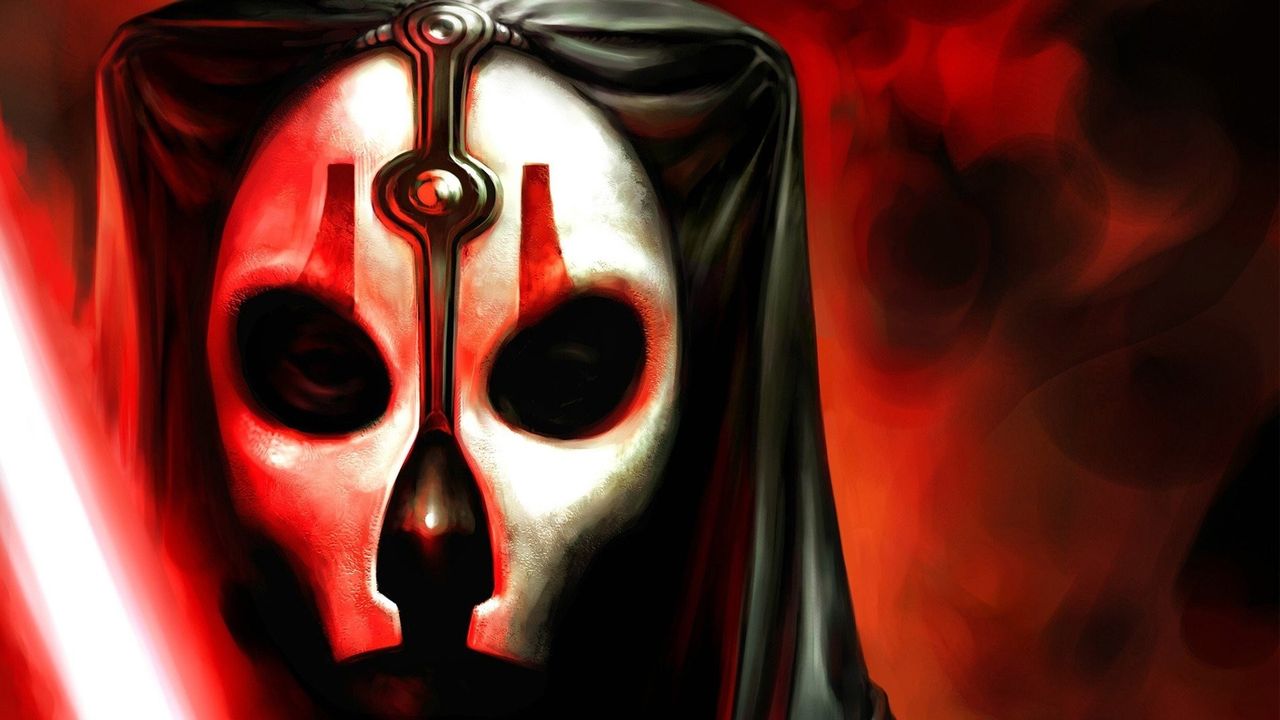
What stands out most about Knights of the Old Republic II is that it’s less a sequel than a deconstruction. At times, an assassination. Most licensed games, at least those that don’t just put familiar characters into a platform or kart racing game, are incredibly careful. They give us the accepted face of their licence, and maybe sprinkle on a few jokes and meta-references for the hardcore fans. They’re respectful. They don’t tread on any toes.
KotOR 2 goes for the throat. It’s a game about questions and about darkness, and designer Chris Avellone is particularly keen to peel back the more uncomfortable niceties of its universe, such as the convenient split between ‘good’ and ‘evil’, and the damage that leads to those labels.
Much of it is designed to invert the original game, as BioShock 2 did with its predecessor. KotOR was, by and large, set in the light side of the universe: a heroic quest, noble warriors fighting evil from a position of moral authority and righteousness.
There was a Dark Side path and moral choices, but it was clear what you were ‘supposed’ to do. Rise up. Become a Jedi Knight. Beat up the guy in black armour who wants to conquer the galaxy. It was the right story at the right time, the Star Wars experience everyone wanted. KotOR 2 uses the same engine and style for entirely different purposes.
It’s a game about questions and about darkness
For starters, it takes place primarily in the dark—among the poor and criminal-controlled corners of a galaxy still scarred and bleeding from both the Mandalorian Wars and a brutal Sith assault that has largely wiped out the Jedi Order.
The player character is no hero, but an outcast, the Exile, banished for making a difficult decision at the right time, who draws allies not by need or force of charisma but a subconscious Force Bond that binds them (much as the Mark of Torment drew suffering souls to The Nameless One in Planescape: Torment).
Fallen knights. Assassins. Gangsters. Bounty hunters. All of them primarily defined not by their potential, but by their pain. In KotOR we met spunky young Twi’lek Mission Vao and her bodyguard Zaalbar—a Wookiee who owes her a life-debt. KotOR 2 brings us a similar case with bounty hunter Mira and Hanhaar, the difference being that Hanhaar sees this, not unreasonably, as slavery. He’s also a sociopath, restrained only by that one scrap of culture.
Far from a cuddly teddy-bear looking to protect his human, he longs to free himself by killing her, ideally horribly, on the grounds that her death will free him. Yet at the same time, he’s too caught up in the concept to listen when she tries to tell him that he doesn’t owe her a damn thing and can just leave.
Easily the most successful of the team is the Exile’s mentor, Kreia, whose presence can best be described as like going on an adventure with your mother-in-law. Kreia can be mistaken for an assault on Star Wars’ simplistic morality, there for parables such as helping a beggar and then seeing him beaten up as a demonstration that even good acts can have deadly consequences.
That’s overly reductive. Firstly, her belief system is every bit as dogmatic as the Jedi/Sith code, only revolving around balance and self-reliance. Second... spoiler alert… she’s the villain. Like everyone else, her philosophy ultimately comes from pain – betrayal, exile. She’s not a character you’re necessarily meant to agree with, just one there to make you think.
For the most part, doing good deeds in KotOR 2 does result in good things happening. It’s just that the game also wants to explore how the road to Hell can be paved with good intentions, and how good people can fall without realising it. Jedi historian Atris, for instance, is too busy seeing the Dark Side in you to notice how quickly she herself fell.
By this point, you’ve probably noticed something – a lot of talk about story, not a whole lot about the game. Unfortunately, there’s a reason for that. KotOR 2 suffered from one of the most premature launches of the last decade. Not only did it have just a 14-16 month development cycle, but LucasArts ended up dragging it back from 2005 to 2004. It showed.
A New Hope
Over the next few years, fans created the Sith Lords Restored Content mod – installed by default on the Steam version. Much of the missing content, including voice files, turned out to be there all the time, just disabled. This mod switches it back on.
As a result, the KotOR 2 we have now is a far superior game to the one that came out in 2004. The catch is that even at the time it was a clumsy RPG. That’s partly due to the graphics and controls, not helped by KotOR having been primarily designed for the Xbox (which, as we all remember, had a potato instead of a graphics card). It’s partly because of the combat, which was still rooted in the D&D style of BioWare’s past games: a massive clash between cinematic action, constant pausing and barely concealed dice-rolling.
Also, the rush to get the game out in a year didn’t leave much time for niceties. So much of the game feels like it’s taking place in a shoebox, albeit one found a long time ago in a galaxy far, far away.
Great chunks of the game were pulled, much of what was left was rough as old boots made of sandpaper, and the final chapters were embarrassingly incomplete. Some levels were little more than linear corridors containing the same handful of enemies to fight. The already spartan design became downright minimalistic.
Most awkwardly of all, most of the Companion plots were simply unfinished. There’d be a scene on the last world where, for instance, two of the droids on the ship were having a showdown, and then… nothing. We never went back to finish that, the Exile instead having an atrocious final boss fight while being chased by flying lightsabers, in a scene that begged for the Benny Hill music, and then the whole planet exploding with an almost apologetic shrug.
The rush to get the game out in a year didn't leave much time for niceties
It doesn’t help that by far the worst part comes at the start. The Exile wakes up on the abandoned Peragus station, which desperately wants to be a System Shock experience full of looming electronic horror, but is actually the dullest couple of hours this side of Myst.
Thankfully there’s a mod to skip it on subsequent playthroughs, but too much story is drip-fed here to do that the first time around. Later worlds improve on this, highlights including a two-part civil war on Onderon and a battle between rival bounty hunters on Nar Shaddaa. Still, few scenes have the raw zip of infiltrating Korriban’s Sith Academy back in the first game. You may return to the planet in this one, but like much of the galaxy, it’s in a bad state.
In short, as a raw game, KotOR 2 doesn’t hold up that well. It’s not awful, it sometimes shines, but even post-fixes, it wears both its era and its tortured development on its sleeve. If you’re going to try it now, especially for the first time, it really does have to be for two things: the writing and the characters. Kreia especially is one of the best game characters ever written, never mind in the Star Wars universe, and while the issues that Chris Avellone raises may have been covered in the Expanded Universe, they’re a breath of fresh air in a mainstream game. Even if it’s not quite an RPG classic, it’s very much a game to respect – and a great example of how flipping the perspective on a licence can be endlessly more interesting than playing things straight.
2026 games: All the upcoming games
Best PC games: Our all-time favorites
Free PC games: Freebie fest
Best FPS games: Finest gunplay
Best RPGs: Grand adventures
Best co-op games: Better together
Original reporting appears on the publisher’s site.
Open original article →
