
John Carmack apologizes after Sandy Petersen says 'Quake ruined id Software,' and for once John Romero doesn't tell Sandy he's wrong
The 30th anniversary of Quake recently passed by—June 22, 2026 was the day—and of course there were acknowledgements, salutes, and celebrations a-plenty, as you'd expect for such a groundbreaking, influential, and enduring game. But it also got a couple of the driving forces behind it reflecting on those days rather mo...
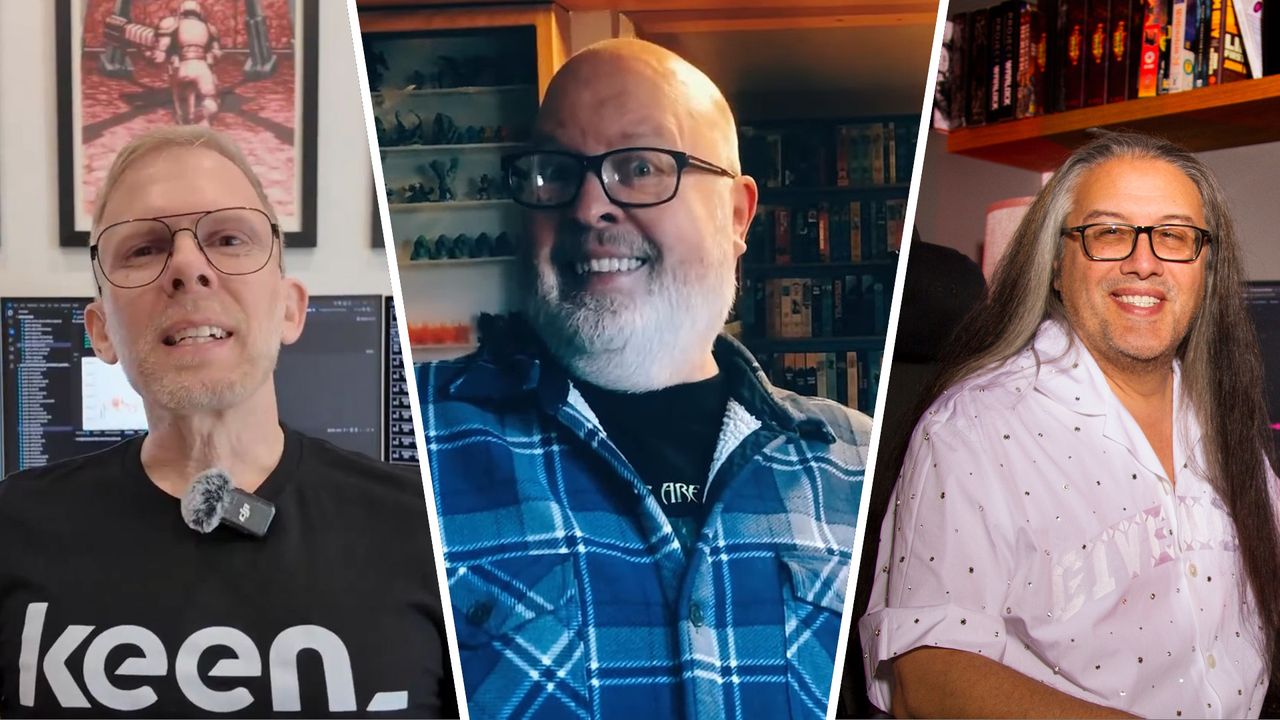
The 30th anniversary of Quake recently passed by—June 22, 2026 was the day—and of course there were acknowledgements, salutes, and celebrations a-plenty, as you'd expect for such a groundbreaking, influential, and enduring game. But it also got a couple of the driving forces behind it reflecting on those days rather more deeply, and as sometimes happens when youthful memories come to the surface, they got pretty deep into their feelings.
Quake co-designer Sandy Petersen, who joined id Software in 1993, got the ball rolling, writing bluntly on X that "Quake ruined id Software." He said Quake "is an amazing feat of art, programming, and design," and credited everyone on the development team for doing "a brilliant job, fulfilling tasks just right." But, he added, the workload was intense, "and I think it broke us spiritually."
Petersen then ran through a list of everyone who left id "within a couple years of finishing Quake," including John Romero, Shawn Green, Dave Taylor, Mike Abrash, American McGee, and of course Petersen himself. All of them went on to have long and fruitful careers in game development, "so plainly we didn't depart because of some kind of talent issue," Petersen wrote. "We were all highly competent, just a little burnt out after the labor of Quake."
"Id Software was never the same after," Petersen wrote. "In my opinion (only an opinion), the only other truly great game that id produced was Quake 3, and it was not at the level of the pre-Quake games."
Despite clearly being a bit melancholy about the whole thing, Petersen said Quake was "absolutely" worth the cost it extracted from id: "Games are more important than game companies, and Quake is an iconic titan of the gaming world." But, he added, "man alive it seems like the company could have had its act together better and kept that dream team."
Sandy Petersen is pretty famous for having his recollections repeatedly (but respectfully) knifed by John Romero, but in this instance his reminiscences were met with agreement, mostly, from the other John of the original id Software squad: Carmack.
In response to Petersen's missive, Carmack said Quake was "overly ambitious technically," and that the studio "could have done all the great multiplayer and modding work inside a Doom++ engine, allowing the designers to work with a more stable base instead of rug-pulling everything out from underneath them a couple times."
"I pushed everyone too hard," Carmack wrote. "I didn’t appreciate how maturing companies need more slack, and that running people at startup intensity constantly will wear them out. Quake was also where I really had to accept my personal limits. I was working pretty much as hard as humanly possible, and I was still slipping past my goal points.
"On all of the founders’ shoulders, our original corporate stock arrangement and buy/sell agreement was a mistake, and resulted in bad incentives. We wanted to ensure that all ownership rested in the hands of people working hard on current projects, but the Silicon Valley standard approach of vesting stock would have worked out better."
Carmack said he doesn't think having elevated expectations for Quake level designers was a mistake (and credited Romero with setting that bar high right from the studio's early days), but acknowledged that "we should have figured out how to pair up artists and designers earlier." But, he continued, "there was infighting among the designers, and the ones that could manage the visuals were happy to disparage the ones that couldn’t."
And then, simply and directly, he apologized: "Sorry, Sandy."
The dissolution of id Software under somewhat acrimonious circumstances has been well documented over the subsequent years: American McGee, for instance, was reportedly fired by Carmack for sub-par performance on Quake, although Petersen later suggested that McGee was actually done dirty by another employee. Petersen also pointed a finger at Carmack's "intensity" in particular in a separate post, writing that Carmack "decided we all needed to be in the same big room together. He’d read about this way of “focusing” the team and it did. But we also had nowhere we could decompress or hide out."
It didn't take long for the other other John—Romero—to enter the convo with his own thoughts on the matter, which aren't too far removed from Carmack's: He echoed the in-hindsight belief that they should have stuck with a Doom++ game while ironing out the fully-3D Quake engine, and that everyone at id was "pushing ourselves past what was reasonable because that was how id had always worked." He also gave particular credit to McGee for being "really good" at building Quake levels, a notably pointed comment given how McGee's time at id ended.
"There are a hundred things we could have done differently, but we did the best we could do at the time with what we knew. Having a media circus around us certainly didn’t help," Romero wrote. "id still goes on, and so does Wolf, Doom, and Quake. Maybe that was what we came together to do. That is more than enough for any game dev, any team, any lifetime really."
Taken altogether, it's a really interesting conversation about one of the most storied game studios in history. But I love a happy ending, and so what really lands for me is how it all wraps up: With an understanding that everyone was younger then, the world was a different place, and as Romero put it, we did the best we could. Following Carmack's apology, Petersen said he didn't blame him for how it all worked out and told Romero he "did an incredible job" on Quake, and Romero thanked Petersen for getting them talking: "It really was a hell of a game."
2026 games: All the upcoming games
Best PC games: Our all-time favorites
Free PC games: Freebie fest
Best FPS games: Finest gunplay
Best RPGs: Grand adventures
Best co-op games: Better together
Original reporting appears on the publisher’s site.
Open original article →