
I had my doubts about Critical Role's new 13-player D&D campaign, but its latest episodes have me fully bought into its grand, ambitious promise
This article contains spoilers for Critical Role Campaign 4, episode 30.I've been rather enjoying Campaign 4 of Critical Role—a 13-player, three-table epic that plans to reinvent the West Marches type of game for a modern actual play show. It's almost daedalian in scope, pure and utter hubris. It shouldn't work. And ye...
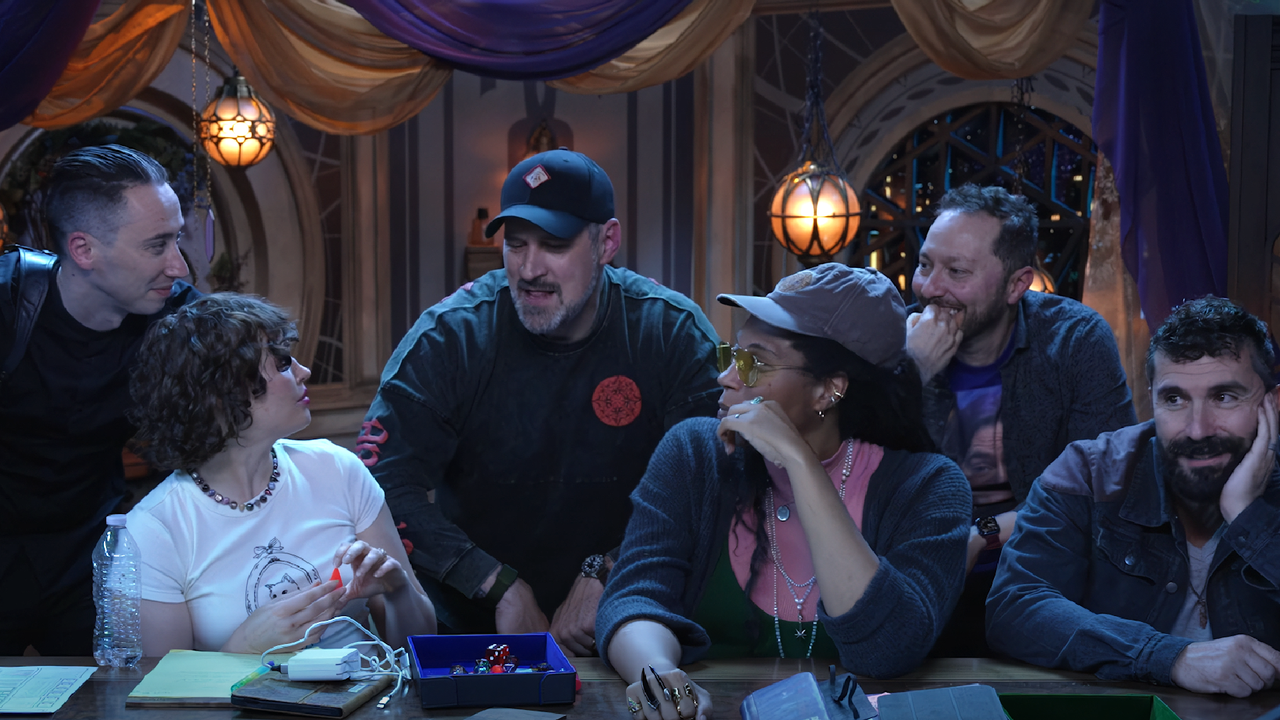
This article contains spoilers for Critical Role Campaign 4, episode 30.
I've been rather enjoying Campaign 4 of Critical Role—a 13-player, three-table epic that plans to reinvent the West Marches type of game for a modern actual play show. It's almost daedalian in scope, pure and utter hubris. It shouldn't work. And yet, 30 episodes in, it absolutely has.
The first four-episode overture was impressive. As I wrote back then, Brennan Lee Mulligan set up and spun 13 individual plates with the ease of someone who has been doing this his whole life—because he has, wielding a documented history with LARP, TTRPGs, and improv comedy with experience and ease.
But the recent arc, where all three parties have come back to the main city of Dol-Makjar, seemed to me a higher task. It's one thing to juggle three tables of players when the story's just finding its feet, it's another to bring those three groups back together and tie off their stories in what essentially constitutes the actual-play equivalent of a first-season finale.
The Hallowed Round; playing host to the history of the rungjani and their failed, but inspiring rebellion, turned into a ritual to heal a scar on the face of the world. Wicander Halovar somehow duping the shrewd matriarch of her house, a prodigal son returning with his fingers crossed behind his back, bearing witness to the judgement of the Tachonis patriarch in front of his equally power-hungry peers.
And, most importantly, an ill-fated expedition into the house of Tachonis itself while papa's away—the focal point of my effusive praise, and something I'm going to spoil, including the ending of episode 30. You have been warned.
No pulled punches
One promise of the 13-player campaign that hadn't (until this point) really taken flight was the idea that any character could die, something oft-repeated by Mulligan but never really practised.
The idea is this: With a thicker-set cast comes more opportunities to be lethal and uncompromising in character design. It also fits with the Game of Thrones-esque plot afoot, the revving-up narratives of institutions grasping tight to their power. Sometimes the hammer comes down.
But 30 episodes in, and not a dropped body in sight (well, apart from Occtis, but he got better). Not for lack of trying, mind—there have been plenty of close calls, including one at the very tip-top of episode 30 itself. But the doom of one Teor Pridesire within the Tachonis Manor finally scratches the very last itch I had: Legitimate consequences for poor play.
Up until this point, a winning streak of good luck had protected the cast against destruction, and there have been some truly miraculous turnarounds. Not just Bolaire narrowly dodging a disintegrate spell that would've certainly killed them, but also—well, pick any one of Azune Nayar's natural 20s.
While I've never assumed Mulligan would pull his punches when the time came, he has been absolutely given a lot of good dice-rolls to justify softening his blows. It's one thing to know, in theory, that anybody can die and that encounters are not tailor-balanced to the party—it's another to throw that lever yourself.
To his credit, Mr. Mulligan wound up that haymaker and threw it as hard as he could."
The tragedy of Teor's wrong turn, and the dice rolls that led to it, ran the show's erstwhile paladin headfirst into an encounter which, as Mulligan outright states, was designed for the possibility of six fully-healed party members.
And to his credit, Mr. Mulligan wound up that haymaker and threw it as hard as he could. Both justifying the existence of the Desperate Measures mechanic—which lets players mark off death saving throw failures for powerful boons, and nearly had Teor vanquish a great evil before he went down—and establishing, properly, the stakes for the campaign going forward.
I'll miss the Pridesire brothers, but this fate was an important vital brick in the construction of this campaign. Without the looming threat of death—resulting from bad choices, inopportune rolls, or a mixture of both—nothing about the oppressive weight of the Sundered Houses works. You can't have a world flooded with institutional big bads if none of them are actually scary.
Episode 30, even more so than the frankly impressive full-house episodes that came before it, confirms for me that this whole campaign could be a masterpiece. I ended the Overture overstimulated, but frankly grateful its cast would be splitting into three more manageable groups—now I'll be counting down the days until the parties converge again.
Baldur's Gate 3 romance: Who to pursue
Baldur's Gate 3 multiplayer: How co-op works
Baldur's Gate 3 endings: For better or worse
Baldur's Gate 3 multiclass builds: Coolest combos
Best RPGs: The greatest you can play now
Original reporting appears on the publisher’s site.
Open original article →
