
Final Fantasy 11 is one of the greatest MMOs of our time
Playing Final Fantasy 11 after all these years is a lot like returning to your hometown only to find it desolate and different. All the old buildings are still there, but the faces aren’t the same. And that feeling I had—that indescribable sense of belonging—is gone too. It’s a bit alienating and tragic, to be honest,...
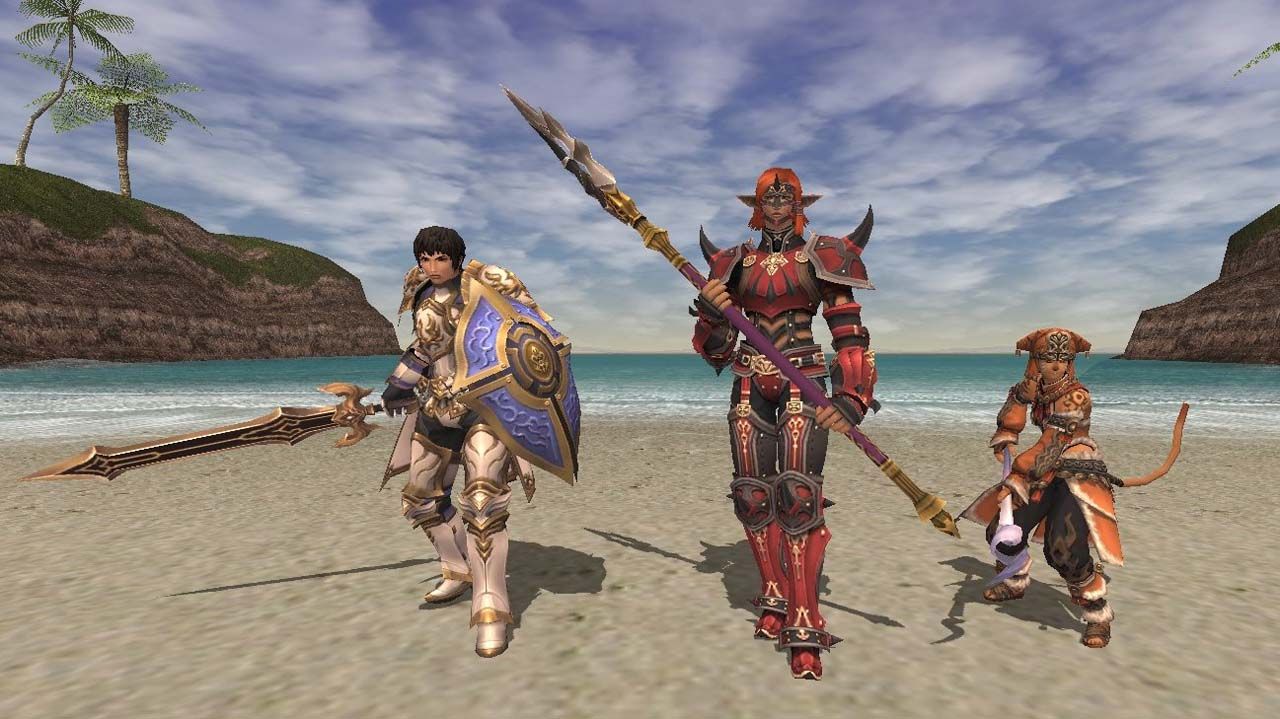
Playing Final Fantasy 11 after all these years is a lot like returning to your hometown only to find it desolate and different. All the old buildings are still there, but the faces aren’t the same. And that feeling I had—that indescribable sense of belonging—is gone too. It’s a bit alienating and tragic, to be honest, but really what else should I expect from an MMO that’s almost 20 years old and clearly nearing the end of its days?
Though I was never as obsessed with Final Fantasy 11 as I was other MMOs like World of Warcraft, I can still vividly remember the summer months I spent playing it. My love for Final Fantasy 11 is the definition of a summer romance. All I wanted to do was spend my time adventuring across the lush fields of Vana’diel, but my parents decided that wasting my break playing videogames was a bad idea, so they regulated my playtime to a few precious hours each day. But I wasn’t going to give up that easily.
I found an old 11-inch TV-VCR combo set buried in our storage closet and hid it in my room. After everyone had gone to bed, I’d quietly grab my PlayStation 2 and bring it to my bed, plug it in, and play Final Fantasy 12 until the sun came up—until the day my mom’s mischief detector finally got her attention and she busted me and refused to keep paying the monthly subscription fee.
Maybe that’s what’s missing now, I think as I walk the streets of Windhurst trying to reacquaint myself. But I know that’s not entirely true. Final Fantasy 11 wasn’t great because playing it was against the rules, it was great because it was an MMO built from the ground up to encourage cooperation and friendship. A relic of an era before World of Warcraft ruined the entire genre by being too popular.
Old relics
Unearthing what makes Final Fantasy 11 great doesn’t just require a shovel, you need a damn excavator. Before I could even log in, I had to wrestle with the infamously complicated PlayOnline service, an esoteric artefact in itself. Back when Final Fantasy 11 launched on the PlayStation 2 online services were beyond rudimentary, especially on a console that wasn’t really designed with internet multiplayer in mind. That’s why Final Fantasy 11 came bundled with a 40GB hard drive and a network adapter.
PlayOnline was an ambitious push to normalise online console gaming. Square Enix designed it to be a kind of platform for all of their multiplayer games and it included ambitious social features for the time, like personal email accounts. It was Steam for the PlayStation 2.
Today, though, PlayOnline is an enormous burden. Even the simple act of registering an account feels like an arcane ritual. PlayOnline ID, PlayOnline member name, PlayOnline password, Square Enix ID, Square Enix password—you probably need them all at one point or another just to get access to Final Fantasy 11. Menus and prompts are so confusingly arranged that more than once I found myself in some weird dead-end corner of PlayOnline with absolutely no real clue how to get where I was going.
And that’s just the tip of the iceberg. Like many older MMOs, Final Fantasy 11 is virtually unplayable in its original state. Its graphics engine can’t count pixels higher than 800 and the client will crash if you so much as even glance at another program.
Fortunately, modders have come to the rescue with a tool called Windower that allows for modern resolutions and graphics options as well as a host of addons and mods to make in-game tasks easier. It’s an incredible godsend.
Takin' it slow
I spent more than two hours that first night just getting everything set up, reading guides, and installing addons before I actually started playing. But even when I was ready for some adventuring, Final Fantasy 11 likes to start slow. A beginner’s guide I found first had me tour around the major districts of Windhurst clicking on teleportation points and joining various crafting guilds for an initial boost of experience points and currency that I could use to buy some decent armour.
The job system remains one of Final Fantasy 11’s greatest triumphs
Everything in Final Fantasy 11 takes an enormous amount of time, but that’s actually something I like about it. Modern MMOs are too eager to please, too afraid you might play something else so they try to make everything as frictionless as possible. But Final Fantasy 11 doesn’t give a damn. It’ll make you spend two minutes walking back and forth between a pair of quest givers half a dozen times. It’ll make every interaction, like simply trading items with another player, require twice as many button presses than is reasonable. It’s almost cruel.
But I also know that this was an enormously complicated game that Square Enix admirably tried to make playable with just a controller, so I’m willing to forgive it. And it’s not like Final Fantasy 11 doesn’t have its charms either. Beneath that thick crust of absolute bullshit is a genuinely innovative MMO. And when I finally got out into the field and started killing monsters, I began feeling that familiar pull. That feeling of being sucked into the world and excited by its mysteries.
The job system, for example, remains one of Final Fantasy 11’s greatest triumphs. Instead of needing to make a new character for each job (the equivalent of a class), I can just switch on the fly and level a different job instead. Final Fantasy 14 iterated on the idea, but Final Fantasy 11’s execution of it is still unrivalled. There’s 22 jobs to unlock and level, each one offering a distinct playstyle. And after reaching a certain level you can take on a secondary job, giving you access to even more abilities to augment your primary ones. It’s MMO theory-crafting at its finest.
At a crossroads
In the few hours I spent exploring Vana’diel, I started to feel myself acclimate to the slower pace. The lack of modern conveniences, like fast travel, and the awful control scheme are jarring at first. But there is a distinct appeal to playing a game that forces me to adapt to it instead of the other way around.
It’s like selling all your belongings and living out in the woods, off the grid. At first the change seems hellish, but then you start to settle in and appreciate the little things—the catchy music, the subtle rhythm of combat, the rush of levelling up.
From the archivesThis Reinstall was originally published in PC Gamer #340 (UK, February 2020).
You can still subscribe to PC Gamer to get new issues of the magazine (in print!) every month.
The only thing that’s missing is other people. Though much of Final Fantasy 11 remains unchanged, one major new feature is that players can now summon their own party of NPCs to help them in combat. Unlike other MMOs, Final Fantasy 11 was designed so combat almost always required a party of players.
It’s one of the reasons Final Fantasy 11 was such a social experience. But as its popularity has waned and almost everyone has moved on, Square Enix has had to make concessions to give newcomers like me a chance.
Each level used to be a hard-fought achievement, but now I can just summon my party of NPCs and quickly grind through a dozen levels in a few hours. Alone.
Though I understand why it had to happen, it’s a reality that makes me uncomfortable. So much of what I loved about Final Fantasy 11 was the social dynamics, but now the only evidence I have that I’m not alone is the constant barrage of messages from people trying to sell items.
I’m not sure whether I’ll continue playing. A part of me is already invested in the journey to reach max level for the first time and do things that childhood me only dreamed of. But if those achievements are earned alone—if I’m the only one fighting and celebrating—is it worth it?
Best MMOs: Most massive
Best strategy games: Number crunching
Best open world games: Unlimited exploration
Best survival games: Live craft love
Best horror games: Fight or flight
Original reporting appears on the publisher’s site.
Open original article →
